29 May 2007

Coal Liquification Mandates Higher Electricity Prices

So the blog'o'sphere is abuzz with discussion of a New York Times piece by Edmund Andrews about proposed subsidies for Fischer-Tropsch production of benzene from coal in order to fuel oversize pickups. Call it the antithesis of demand-side management. Generally speaking the idea of large scale F-T coal-to-liquids is a program that makes corn ethanol look like a model of efficiency.

For one thing, I don't see how this adds to the USA's energy security. The F-T process is a net energy loser, and it's not like the USA is a major coal exporter. According to the Energy Information Administration statistics on coal the USA exports about 50 Mtons of coal, imports 30 Mtons, and produces about 1200 Mtons. This means the USA's net coal exports only amount to 1.7 % of total production. While the USA may have the worlds largest coal reserves, historically coal reserve numbers haven't proven to be very accurate and it certainly doesn't look like there's a lot of spare capacity.

This also puts paid to the fig leaf of carbon dioxide sequestration. While coal-fired electricity can claim they are working on sequestration, F-T fuel really can't sequester their product, only the inefficiencies in producing it. As such, they will make themselves even more vulnerable to acquisitions accusations that they are cooking the planet then they already are.

So it would seem that the proposal is to trade away the USA's self sufficiency in electricity production in order to slightly reduce oil imports. What's more important, fueling your car or heating your house? Of course, coal executives don't care about the average consumer, they care about their profits. However, I'm not sure why the American taxpayer should subsidize this. What do the American people get from this? A quote from the NY Times article is illustrative:
But coal executives anticipate potentially huge profits. Gregory H. Boyce, chief executive of Peabody Energy, based in St. Louis, which has $5.3 billion in sales, told an industry conference nearly two years ago that the value of Peabody’s coal reserves would skyrocket almost tenfold, to $3.6 trillion, if it sold all its coal in the form of liquid fuels.
So what's the obvious side effect here? Higher electricity prices, obviously. The cost of coal constitutes about 50 % of the cost of coal-fired thermal electricity generation. Hence, if the value of coal shoots up by a factor of ten as suggested the price of coal-fired electricity should go up 5-fold. The coal executives would be giveing a gift to their competition. Nuclear, wind, and solar power would quickly become more competitive and start to displace coal-fired generation. The last thing the coal industry should logically want is to encourage the installation of more wind and solar power; these industries have learning rates that will eventually push their cost below that of coal. Why would an coal executive hasten that? One can certainly imagine that if enough coal is displaced, the price will again crash. Hence they coal executive might in the end have all the coal they want to produce F-T benzene. This is assuming their corporations survive the roller-coaster ride they are setting themselves up for and don't go bankrupt.

Update: From the NY Times, Science Panel Finds Fault With Estimates of Coal Supply. -cough- Coal reserve estimates inaccurate? I'm shocked.

15 May 2007

The Glittering Future of Solar Power:
Prognostication of Photovoltaic Capacity Extrapolated from Historical Trends

Historically the photoelectric effect has been known for a couple hundred years ever since it was observed in elemental Selenium around the turn of the 19th century. It became practical to use the photoelectric effect to generate power with the development of the transistor in 1947 that lead directly to Germanium (and later Silicon) solar cells that could produce a useful amount of electricity. Early solar cells saw use in extreme applications, such as providing power for satellites. Serious efforts to develop photovoltaic cells for commercial power production wasn't undertaken until the Arab oil crisis's of the 1970s. The USA developed an early dominance in the technology, but that advantage withered as the memory of the oil crisis faded from public view and successive administrations ignored the technology. More recently interest in photovoltaics has been rekindled due to concern around global warming, predominately supported by programs in Germany and Japan, whose domestic manufacturers now produce the bulk of solar cells. Research and development in photovoltaic technology is proceeding at a frenzied pace, as triple-junction thin-film silicon and Copper-Indium-Gallium-Selenide (CIGS) cells are posed to take over market share from traditional polycrystalline silicon wafers sawed from solid ingots. In the future decades, nanotechnology and organic semiconductors offer the potential for new generations of solar power technology.

Photovoltaic cells are not like any other method humanity uses to collect and use energy. Existing techniques extract energy either from mechanical motion (wind, hydroelectric, tidal) or heat differentials (fossil fuels, nuclear, solar-thermal). Whereas all these systems produce useful work by the turning of a shaft photovoltaics convert sunlight directly into direct-current electricity. While photovoltaics are still beholden to the laws of thermodynamics and entropy, the difference still implies that they abide by difference rules. In particular, they have a total absence of moving parts and as a result are almost free of maintenance requirements. Photovoltaic cells degrade in performance only very slowly as they are bombarded by cosmic rays. Most manufacturers offer warranties that guarantee they will still reach 80 % of their rated power output after 25-years.

Photovoltaic Share of the Energy Pie

A report by Merill Lynch (Hat-tip to Clean Break) found that between 2200-2500 MWpeak worth of solar cells were manufactured in 2006 [1]. Taking the median value of 2350 MWpeak and a capacity factor (cf) of 0.2, which is typical, then the annual electricity capacity was 4 million kWh. According to the Energy Information Administration (US DoE), the world produced 16,400 billion kWh of electricity in 2004, and that figure is growing at 3.2 % a year since 1994. If we extrapolate to 2006 at 4 % growth then the total electricity production was an estimated 17,950 billion kWh. Photovoltaic power consists of only about 0.6 % of the annual growth in electricity capacity.

It seems minute, and it is, for now. However, solar production hasn't been growing at 3.2% per year. It has, in fact, been growing at 33 % per annum for the last decade [2], and it's expected to continue that trend for the immediate future. The cumulative installed capacity can be expressed as
C(t) = Co e(γ-δ)(t-to)/(γ-δ)
where C(t) is the cumulative installed PV electricity generation capacity, Co is the initial installed capacity, γ is the growth rate, δ is the degradation rate (10 % efficiency loss every 12.5 years or 0.008), and t is of course the time in years. Nothing fancy here, just pure exponential growth.
Figure 1: Scenarios for PV cumulative installed capacity as compared
to worldwide demand growth of 4 % per annum over the next 25 years.

As one can see from Figure 1, while the impact of solar may be trivial now, it will not be over the next 25 years. If solar can maintain the same growth rate is has for the past decade, solar can supply all of mankind's projected electricity demands 26 years from now.

Cost of Photovoltaic-derived Electricity

Generally speaking the cost of any technology declines with production capacity according to a power-logarithm law,
P(t) = Po ρlog2( Exp( γ (t-to) )
where P(t) is the price as a function of time, Po is the initial price, ρ is the learning rate, and C(t) is the capacity. Historically, ρ for photovoltaics has been very stable around 0.8 which corresponds to a learning rate of 20 % as depicted in Figure 2.
Figure 2: Learning rate for photovoltaic panels (reprinted from [3]).

The learning rate of photovoltaics is much higher than that of other energy technologies. In fact, it's more in-line with things like computers or DVD players. This fact should surprise no one; as I mentioned in the introduction, photovoltaics are different from all other forms of energy production. The small incremental nature of photovoltaics is a major advantage from a R&D perspective, as I've described previously. While coal and nuclear power plants are installed in increments of hundreds or thousands of megawatts, solar panels are measured in the hundreds of watts. Thus while a design change to a nuclear power plant can take a decade or more to manifest itself, solar manufacturers can do this in weeks. As a result, photovoltaic technology will go through hundreds of design revisions in the time it takes coal or nuclear plants to go through one. Some learning rates for various technologies are listed in Table 1. One thing to take from the table is not only that photovoltaics have a superior learning rate, but that they also have so much further to grow.

Table 1: Historical Learning Rates for Electricity Producing Technologies (extracted from [3]).

Technology

Learning Rate (%)

Correlation (R2)

Sample Period (years)

Coal

7.6

0.90

1975-1993

Nuclear

5.8

0.95

1975-1993

Hydroelectric

1.4

0.89

1975-1993

Gas Turbines

13

0.94

1958-1980

Wind

17

0.94

1980-1994

Photovoltaic

20

0.99

1968-1998

Laser Diodes

23

0.95

1982-1994


Current panel costs are treading at around $4.80/Wp, and the various extras such as frames, labour cost an addition $2.50/Wp. I'll use two locations to establish a baseline for the cost of photovoltaic power: Stuggart, Germany and Los Angeles, USA. A Retscreen analysis shows that the Stuggard location produces 1.089 MWh/year /kWp (which represents a capacity factor of 0.17) and LA produces 1.605 MWh/year /kWp (capacity factor 0.25). Simulations in RETSCREEN find that amortized over 25 years these locations can produce power at $0.24/kWh in Stuggart and $0.21/kWh in California [4]. Financial assumptions are: energy inflation is equal to monetary inflation, interest is 1.0 % above prime (government rates).

World residential electricity prices are generally lower than this [5]. France, which is primarily nuclear, has a rate of $0.144/kWh. The USA, which is coal based, has a mean rate of $0.095/kWh. Canada, which is mostly hydroelectric is one of the lowest at $0.068/kWh; another hydroelectric nation, Norway, comes in at $0.071/kWh. All of these numbers will include associated transmission costs. When we use the growth curves shown previously in Figure 1 with our equation for price, we find that the cost of PV drops below that of conventional electricity generation startlingly fast (Figure 3).
Figure 3: Cost of photovoltaic electricity for Stuggart and Los Angeles versus baselines
for France (nuclear-based), USA (coal-based), and Canada (hydroelectric-based).

Interestingly, the location of photovoltaics has little impact on their price over the long term. Rather it is the industy's growth rate which dictates the future price. One might be curious as to where the price point might be when the industry saturates.

The actual price decline of PV has stalled over the past year and a half. Essentially what happened is the PV industry eclipsed the microelectronics industry in terms of silicon consumption before thin-film silicon technologies were ready for commercial production. As a result, there's been a bit of a lag as silicon producers catch up to demand. I do not think that this will continue to be a problem, as I will explain below.

Limitations to Growth

For one to look at the curves in the previous sections, and believe that they are achievable then assurances that there won't be too many roadblocks in the future. This section will take a closer look at potential issues that could slow the growth of the photovoltaic industry.

Economic Incentives
One of the issue with photovoltaics is that as an emergent technology it isn't cost competitive with fossil fuels today. However, subsidy programs by governments of Japan and Germany have been generating tremendous demand growth by making solar cost competitive. Recently more jurisdictions have put forth subsidy programs, such as California, New Mexico, Ontario, Spain, Italy, and Portugal. One obvious question in looking at the exponential growth curves in Figure 1 is, "Just how much is all of this going to cost?" Combining the equations for the learning rate with the growth rate provides us with an answer.
Psubsidy = (Po ρlog2( exp() ) - 0.05)* C(t-to) e(γ-δ)(t-to) / (γ-δ)
This assumes that existing installations are amortized at the same rate as the price of new modules drops. This is not a bad assumption simply due to the massive growth rate, which has a doubling time of 2.1-2.7 years.
Figure 4: Annual cost to subsidize entirety of world PV production to a
rate of $0.05/kWh under 33 % annual growth scenario.

Figure 5: Annual cost to subsidize entirety of world PV production to a rate of $0.05/kWh under 25 % annual growth scenario.

The total cost of these subsidies run to about US$90 billion for the 33 % growth model and US$154 billion for the 25 % model until the price of solar power drops below the desired $0.05/kWh. It's not an insignificant amount of money, but neither is it a particularly onerous cost for transforming our energy structure; the USA alone budgets $24 billion a year to the Department of Energy.

It's probably worth noting that return rate is over one trillion dollars a year by 2031 against the $0.05/kWh baseline. This can be construed either as potential tax revenue or additional income that will be contributed to GDP.

Intermittency
Intermittency is the problem that renewable energy sources suffer from due to the natural fluctuations of their power source. Any transmission grid that relies on renewable sources as a primary input will require a substantial amount of storage, deferrable demand, or load-following spare capacity. The severity of intermittency can be thought of as a combination of its predictability, correlation to demand, and variance. Compared to its chief competitor, wind, solar is far more predictable. One can be assured of the position of the sun in the sky every day with the mitigating factor being cloud cover. However, integrated over a large area the portion of the sky covered with cloud can be reliably estimated. In comparison, wind velocity is nearly impossible to predict. It also correlates relatively well to the natural daily peak in demand, for a noisy real-world system. The variance of wind and solar are roughly equal, which is a little surprising given the dinural cycle of night and day that solar has to deal with. In addition to their daily variance both solar and wind are subject to seasonal variations.

It is my opinion that the concern over intermittency of solar power is exaggerated. This is due to the fact that the learning rate of photovoltaics dictates that the cost of solar will fall below that of the main established sources of power (coal, nuclear) well before solar will constitute a significant fraction of our energy consumption. I think most people will agree, when the price of solar energy drops below that of the competition, the game changes. When you have power to burn, simple and low-capital techniques of storing or transmitting solar electricity become practical. At $0.05/kWh solar would have a margin of $0.04/kWh or more to work within for charging electric vehicles, filling deferrable demand, storage techniques such as Vanadium redox batteries, or long distance high-voltage direct-current transmission.

Resource Limitations
One of the factors limiting photovoltaic growth at the moment is a shortage of electrical-grade refined silicon. Silicon itself is not in short supply, being the second most abundant element in the Earth's crust after Oxygen. This limitation is likely to fall away as new cell designs that use less silicon are deployed commercially. Traditional cells are made by sawing a solid block of polycrystalline silicon and then polishing the surfaces. This results in a cell that is 300 μm with around 50-100 μm of material wasted. New techniques such as ribbon growth can reduce that figure to 100 μm. Furthermore, thin film silicon cells grown by chemical vapour deposition, such as Sharp's triple-junction cells, can achieve the same performance as polycrystalline cells with only 10 μm of silicon. As these techniques reach market penetration (ribbon growth is proprietary, thin-film techniques are not), they should reduce the strain on silicon refiners.

The other resource restriction is due to geographical limitations. Some renewable resources (hydroelectric, tidal) are tightly limited to certain terrain, such as tidal basins or river valleys. Wind is a somewhat more diffuse, but the best resources where the wind blows most strongly and consistently are still limited compared to humankind's energy consumption.
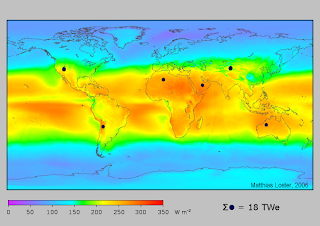
Figure 6: Global Solar Energy Abundance Map [6].

World insolation (incoming solar radiation) on the other hand is massive and relatively evenly distributed. The sun outputs 1026 watts of power and our tiny little planet intercepts about a billionth of that. Right now the human race consumes around 18 TW of energy, or 1/10,000th of what strikes the Earth. Roughly 1/3rd of that is useful work, the rest is lost to entropy. The 24-hour average insolation for the inhabited world spans 150-300 W/m2. That implies we would need 3.5-7 m2 of 10 % efficient panels per person, to supply all of our energy needs from solar power.

Personnel Shortfall
Running short of trained people in a rapidly growing industry is always presents a problem. Take, for example, nuclear engineers. There aren't many of them, training one takes about four years, and their skills are not easily transferred to other disciplines. The photovoltaics industry is similar enough to the microelectronics industry that they can trade personnel, however. The microelectronics industry has already built up strong education programs that photovoltaics can piggy-back.

If chemical vapour deposition (CVD) for thin-film silicon becomes the dominant production method, this still should not present too great a problem. CVD is a common manufacturing technique used for all sorts of coatings, such as tribological (hardness) coatings for tools, or even aluminized mylar. It's also used in microelectronics. It does happen to be more of an art then a science, which means that learning requires experience.

Ancillary Costs
Installing a rack of PV modules on a garage is not simply a matter of fixing them down with some twist-ties. Typically they need a metal frame so they present an optimum azimuth to the sun, they need electrical wiring, they need an inverter to transform DC to AC power, they may need a net-meter to sell power back to the utility, and of course, there's the labour required for installation. As many readers will know, there's quite an argument in California as to whether or not a licensed electrician is required for installations. One might also consider the 3 mm layer of glass (glazing) that protects the cells from hail also 'ancillary' although it is included in the sticker price.

The main question is whether or not ancillary costs have a similar learning rate to that of the modules themselves. My analysis has assumed that they do. We will probably see declines in the ancillary costs by better product integration and standardization. Rugged encapsulation combined with light-trapping surface patterning will probably slowly replace the standard glazing. Inverters should improve drastically both in terms of cost and lifespan. There's also always been the idea of incorporating solar cells into dual-use products, such as solar shingles or skylights.

Consumer Acceptance
Unlike just about every other source of electrical generation, photovoltaic power doesn't have any "Not In My Backyard" (aka NIMBY) issues. `Nuff said.

Conclusions

Many people will look at the graphs in disbelief that the easy path photovoltaic power has been travelling can continue. All I can really say in reply is, those are the historical numbers. The learning rate is exceptionally stable. The growth rate has been, if anything, accelerating in the face of a industry silicon shortage. Thin-film technologies seem well positioned to cause the price to continue to fail into the near future. Solar power doesn't have very far to fall in many European nations before it's cheaper than residential rates. As residential solar becomes the cheapest power available that will continue to push demand upward and fuel growth. There's nothing obvious to me that says 'Stop' in solar's future and it's a fact of exponential growth that the early years matter the most. Even if the growth rate drops 1 % a year over the next 25-years the eventually outcome seems predetermined, it's just a question of the timing.

References

[1] S. Pajjuri, M. Heller, Y.S. Tien, I. Tu, B. Hodess, "Solar Wave - Apr-07 Edition" Merill Lynch (2007).
[2] W. Hoffmann, "PV solar electricity industry: Market growth and perspective", Solar Energy Materials & Solar Cells 90 (2006), pp. 3285-3311.
[3] A. McDonald, L. Schrattenholzer, "Learning rates for energy technologies", Energy Policy 29 (2001), pp. 255-261.
[4] RETScreen International Clean Energy Project Analysis Software, National Resources Canada.
[5] Electricity Prices for Households, Energy Information Administration, February 28,2007.
[6] Matthias Loster, Solar land area, Wikipedia.org, 2006.

01 May 2007

ecoAction: Real or Greenwashing?

Several months ago the minority Conservative federal government of Canada made a big gear-change and overhauled their environmental policy. Gone were the efforts to suppress the validity of climate change science, and in came a six-point plan encapsulated as ecoAction. The six components are based on: a biofuels initiative, a new bill on toxic chemicals and a similar clean air act for airborne pollutants. In addition there was two grab-bag programs for transportation (ecoTransport) and residential/commercial/industrial (ecoEnergy), as well as a trust-fund to fund specific programs in the individual provinces. With such 'eco' branding, my natural reaction was to assume it was a major green-washing program. Closer examination reveals a little more beef (or pork, as the program goes).

Politically, I think this sea change was arrived at for a variety of reasons. One certainly has to be the nomination of Stephen Dion as leader of the Liberal Party. Dion was previously the environment minister in the previous government and an active supporter of Kyoto and a carbon tax. The conservative greening stole much of his thunder.

Furthermore, Harper has long been accused of pushing Canada conservatism towards neo-conservative tenants. On issues such as the environment and personal freedoms they were moving out of touch with their base; As a result, they seem to have been losing votes to the Green party, which is now polling around 9-12 % nationally and gaining substantial support in rural Alberta. I think the Conservative government grew concerned with changing demographics and that their policies were risking freezing out support for them from important special interest groups. The change appeared to me to be signaled when the government moved away from the US administration and sharply criticized them over Maher Arar and his deportation from the USA to Syria and subsequent torture. Right now they are facing all sorts of trouble over insufficient oversight of Afghan prisoners handed over to the Afghan government.

In addition, political party donations from corporations has been sharply curtailed following the patronage scandals that saw the Liberal party fall from grace. That in turn will signal a welcome strengthening of the importance of individual citizens for fund raising purposes. Nor is corporate opposition to Kyoto uniform. A number of corporate leaders want some form of climate change legislation to help indemnify them from the associated liabilities.

Also, we must remember that the Conservatives are in a minority position in parliament, and much of this could be a fig leaf to gain the support of the New Democratic Party on other issues, such as the intervention in Afghanistan.

Environmental Trust

The biggest budgetary item is an environmental trust fund that is disbursing funds to the provinces, at $1.5 billion per year. To a certain extent, this is a reflection of the decentralized nature of governance in Canada. After all, the provinces are the ones with the control over electrical power generation. Basically it appears to be providing matching funds with a healthy dose of pork. For example, British Columbia is receiving funds for, "Support for the development of a, “hydrogen highway,” a network of hydrogen fueling stations for fuel celled buses and vehicles;" which is unsurprising given the presence of a (struggling) fuel cell industry in the province. Similarly, Alberta's focusing its efforts on oxymoronic 'clean coal' and sequestration.

Biofuels

The biofuel initiative appears to be an example of pure pork, with $200 million in subsidies to ethanol and biodiesel producers and $145 million for research, probably centered around cellulosic ethanol (-cough- Iogen -cough-). The goal is E5/B5 by 2010.

Chemical Regulation

Environment Canada has been engaged in a program since 1999 to categorize a wide variety of chemicals used in industry and to produce goods for human consumption to gauge how hazardous they are. Chemicals are categorized on whether they are persistent and bioaccumulative. Essentially, the database is at the point now where they can start implementing some regulations to insure bad chemicals are properly handled or not at all. I don't think there's any serious opposition to this plan except from some of the giant chemical producer multinationals.

Airborne Pollution

The original clean air act of the conservatives did not contain significant regulations on CO2 emissions. Instead, it mostly was oriented around regulating smog and particle pollution. The opposition parties conspired to insert an amendment that would force the government to meet Kyoto-treaty targets. This caused a great deal of political posturing on both sides of the aisle, as I talked about previously.

The Conservatives then turned back around and came up with their own plan: a 20 % reduction in greenhouse gas emissions (from 2007 levels) by 2020. It's hard not to notice how similar these numbers are in terms of timescale and reduction to Kyoto, but with everything pushed forward a decade. Kyoto originally came into effect in 1997, when the Liberals were in power.

I have not yet had the time to review this piece of legislation, but criticism has been fierce. If we ignore the political attacks, one of the most vitriolic critics is David Suzuki, who has every right to vent criticism. He essentially seems to think that the act is a sham. Al Gore has also been critical, pointing out that the bill language contains references to 'intensity reductions'. The idea behind 'intensity reductions' is that greenhouse gas producing industries are allowed to produce as much as they can sell, but they have to improve the efficiency of their processes. I.e. for every ton of aluminium you smelt, or bitumen you refine, you need to progressively improve the efficiency of the process. I'm a little of two minds on this: for one, this seems like a weasel way out. On the other hand, it seems logical that we should place the onus for reducing consumption on consumers and not producers. I'm sure once I have an opportunity to read the legislation I'll have more to say but as of today the government's website still is carrying the old version of bill C-30.

Transportation

The ecoTransport program appears to establish or repackage a number of public outreach programs surrounding public transport, personal automobiles, and commercial fleets. More importantly, it also contains a feebate program. Fuel efficient vehicles will receive a rebate of $2000 - $1000 depending on their efficiency numbers. There is a separate category for trucks, which will limit the effectiveness of the program. Much less publicized is an excise tax on gas-guzzlers. It's not a terribly aggressive tax but it does slap the Nissan Armada for $3000 and Hummer H3 for $2000.

Unfortunately, this program is hurt by the fact that E85 flex-fuel vehicles will also receive a $1000 rebate. It simply isn't possible to fuel a vehicle in Canada with E85 and it stands to reason that you never will (noting the biofuels initiative goal of E5 by 2010). Even if you think the energy return on ethanol is positive, it's extremely unlikely that supply will ever be sufficient to exceed E10; I don't see the point in paying GM to install ethanol-compatible hardware in their cars to compensate them for their piss-poor fuel economy engineering and design choices.

Another substantial policy change for ecoTransport is a $150 tax credit towards the purchase of public transit passes. This does two things: it helps reduce the relatively high marginal cost of riding public transportation rather than driving an existing car, and more importantly it gives the student councils at universities and colleges an effective tool to continue to push forward with universal transit pass schemes. I'm certainly a believer in getting students to ride transit early in their lives before they become habituated towards driving everywhere and grow fat.

Energy Efficiency

The ecoEnergy program is mostly composed of energy efficiency programs. However, there is a 1 ¢/kWh, 10-year subsidy for renewable power. This subsidy has a minimum entry level of 1 MW with fixed capacity factors, so it's not going to be applicable to solar cells on the roof of someone's garage.

The most important items, from the prospective of Joe Average, are the grant programs for home efficiency, solar-thermal water and space heating. There's up to $5000 (at a 25 % subsidy) available towards home retrofits and $300-1600/m2 for solar water heating systems (evacuated tube collectors being the high end). Unfortunately, there does not appear to be a specific program for ground-source heat pumps. A lot of construction in Canada still has baseboard electric heating, and in a subzero winter environment the ground-source heat pump is the most efficient solution but it comes with a big attached capital cost.

On the issue of energy efficiency of various appliances I feel that more could be done. There have been a pair of amendments to energy efficiency standards recently by the Conservative government but they mostly add more categories (i.e. wine chillers) than apply some meaty standards for the big consumers, like air conditioners and refrigerators. Also, how about a labeling requirement for vampire electric power consumption? A new development that is related to this proposal is a proposed ban on incandescent lighting by 2012.

Conclusion

On the question of genuine or greenwashing, I think the ecoAction program comes down on the genuine side. There's pork, there's loopholes (E85 cars), there's questionable methodology ('intensity reduction'), but there's also a ton of good stuff with billions of real money allocated towards it.

Energy Trust grade: B-
Biofuels Initiative grade: C+
Chemical Substances grade: A-
Clean Air grade: incomplete
ecoEnergy grade: B
ecoTransport grade: B
ecoAction overall grade: B

Overall, from a policy wonk perspective, the mechanisms seem solid and comprehensive. This package covers a lot of new ground so there is bound to be a lot of niggling criticisms from all corners of the political spectrum; I don't see the need to protest too much. I also think that this policy, as it is derived from the Conservative party, is a worth more than it seems on first inspection. The goalposts have been moved along the green-brown line, and that's a helpful thing.

The reason why I don't grade it any higher is simply due to the lack of zeal. It's true that Canada previously had little in the way of federal environmental or energy policy. It's also true that most citizens can only accept change so quickly. However, I think it's clear that a lot of the dollar values could easily be doubled. For example, a public transit pass costs $30-45 a month, whereas the government is only offering a $150 annual tax deduction. How would we pay for these programs you ask? Well, through the $20/ton carbon dioxide tax that the government doesn't want to implement of course.

30 April 2007

Lightbulb Haiku

The National Post is appalled, appalled I say, that their federal Conservatives are going to ban incandescent light bulbs by 2012. They're so appalled, they've decided to run a contest, asking readers to write a poem in the form of an ode to the light bulb. Here's my entry, I slaved long and hard to assemble my haiku (well, at least a minute or so):
National Post confused?
Brown vote like Post revenue:
shrinking. Steve reads polls.
'Steve' is Prime Minister Stephen Harper. There are many things that can be said about Harper; stupid is not one of them. The confluence of the IPCC reports, "An Inconvenient Truth", and public discussion about Kyoto has clearly resulted in a significant shift in public opinion towards environmentalism. Harper, in turn, has reacted to this. His rapid shift seems to have left some of his supporters in his dust as they continue to recycle year-old talking points.

Environmentally, the incandescent bulb ban is a small step. Symbolically, it is a much bigger thing. What is says is, "Yes, you all will need to make some little sacrifices for the greater good." The negative response thus far has been incredibly whiny. Cry more neophytes.

27 April 2007

CFL and Battery Safe Disposal

Much hay has been made recently in the energy blogosphere and the mainstream media about the milligrams of Mercury vapour contained in compact fluorescent lamps (CFLs). Mercury is used in the lamps because it's a strong emitter of blue light; street lamps used to be based on mercury vapour until the much more efficient yellow sodium bulbs came into effect.

CFLs shouldn't be thrown into the garbage or bluebox, for the sake of the health of sanitation workers who could build up their cumulative exposure around newly broken tubes. Fortunately, rechargable battery manufacturers have had to deal with similar issues with Nickel-Cadium cells. As such, they've created a database (http://www.rbrc.org/call2recycle/dropoff/index.php) of hazardous waste return sites. I've looked at the list for my area and a lot of these venues will accept not just batteries but also compact fluorescent lamps and presumably other small hazardous items, like old-style mercury switches used in thermostats and the like. On the issue of electronic waste, you're probably still going to have to do some hunting to find an appropriate depot.

So, next time you see a discussion of CFLs on the web, proffer up this link.

20 April 2007

Carbon Tax Scaremongering

Environmental policy is turning into a new battleground in Canadian politics, with the positions of the major parties rapidly shifting in response to the general solidification of global warming consensus. Prior to the Conservative's election victory in which they won a minority government, the Liberal's ratified Kyoto. Then, the Liberal party nominated the green former-environment minister Stephen Dion to their leadership position. The Conservative government evidently decided they were fighting a losing battle on environmental policy (and votes) and fired back with a major six-point plan named 'ecoAction' and replaced the existing environment minister with John Baird to provide new blood at the position. ecoAction was a major program, involving several billion dollars in spending, and acted to steal much of Dion's thunder. I am still in the process of reviewing ecoAction to determine how much is real reform and how much is green washing (to be the subject of a future post). Politically it was a big win for the Conservatives.

The Liberals, in conjunction with the New Democratic Party (social-democrats) and Bloc Quebecois (Quebec nationalists) decided to hit back by introducing a bill (C-288) that would require Canada to meet the Kyoto greenhouse gas emission targets. Since the Conservatives are in a minority, the other parties can potentially force the bill through parliament. If it passes the Conservatives have implied that they may consider it a vote of no confidence (and hence it would result in a new election being called). The Conservative government is strongly against any sort of carbon taxation or trading scheme. As a result, they commissioned a study which was released on Thursday that interpreted the proposed bill as narrowly and inflexibly as possible, claiming that the bill would plunge Canada into a recession.

The report makes a number of interesting charges, most of which are very sensational:
  • The unemployment rate would rise by 25% with
    about 275,000 Canadians losing their jobs by 2009;
  • The cost of electricity would increase by 50% after
    2010;
  • The price of gasoline would rise by 60%;
  • The cost of natural gas would more than double;
  • Real disposable income for a family of four would
    fall by $4,000.
The study claims that a carbon tax of $195 would be necessary to generate 75 % of the required 30 % greenhouse gas emissions reduction, with the remaining 25 % fraction of the carbon pie coming from market purchases of carbon credits from other countries. That 25 % of carbon credits in turn is said to reflect 75 % of the world market of carbon purchases. The supposition is that with Canada purchasing the supermajority of credits, a bull market on credits with result and potentially prices skyrocketing. Sounds responsible right? Unfortunately, there's a credibility gap here: the study specifically eliminates credits resulting from those eastern European countries whose economies crashed after 1990 and have the majority of the world's carbon credits to sell. Why? Because, "EU countries are expected to generate very few, if any, excess AAUs for sale internationally that would represent real GHG reductions." Fair enough, but why play the stupid numbers game if that's your primary point? Afterall, the real objective of the Kyoto protocol is to put a dollar value on greenhouse gas emissions and establish a basis for a worldwide market in carbon.

Media coverage has been amusing, ranging from pure support from CanWest Global (complete with stock photos from the Depression), to a little more skeptical from CBC. CBC's article by Robert Sheppard quotes Simon Fraser University's Mark Jaccard as pointing out:
"As someone who studies capital stock, this is an insane discussion," Jaccard says. To meet Kyoto in the short run, he says, we're talking about forcing the turnover of about 30 per cent of our old cars, housing and inefficient machinery in the space of just a few years.
Indeed.

The whole exercise basically amounts to cooking up numbers that have little basis in reality. Kyoto clearly has a couple of huge problems for Canada: one, the moving five-year average terminating in 2012 means that meeting any targets requires changes to begin years ago, and as a consequence meeting Kyoto de facto implies buying carbon credits from the crashed economies of former Soviet-bloc countries. The Conservative study has essentially eliminated this as a possibility, which as a result it reaches implausible conclusions.

I think it's pretty clear that Canada can't meet its Kyoto commitments, particularly if it has to compete against a non-regulated USA marketplace in the short-term. Energy efficiency and clean-tech programs in general seem to offer short-term pain for long-term gain. Purchasing foreign carbon credits seems to be the only way to actually meet Kyoto targets, but will it actually accomplish a global reduction in CO2 emissions? I don't see it happening — the market is diluted by what the Eastern European countries can sell and still stay under their 1990 numbers — and in any case it is better politics and policy to keep that capital in Canada and use it for Canadian energy programs. Canadian politicians need to be saying, "No, we aren't going to meet Kyoto, but we don't feel that absolves us of our responsibility to act as a good global citizen. In order for both Canada and the world to resolve the climate change crisis, we will both need to curtail our emissions and develop technology and policy that we can share with less well-to-do nations and avert future calamity." Instead we get a doomsday scenario.

In short, it appears both parties are acting dishonestly. The Liberals are attempting to force-feed the Conservatives a piece of poison-pill legislation that would see the country spend large amounts of capital to purchase carbon credits internationally with dubious environmental benefits. The Conservative, in turn, are taking their marching orders from the oil and gas industry (Alberta is responsible for 43 % of the growth in GHG emissions since 1990) and being exceedingly inflexible in their efforts to stave-off a carbon tax. As a result they've painted themselves into a corner by not allowing themselves room to reach a compromise and claim victory. Rather than placing blame on the previous Liberal governments for doing nothing, they're still stuck in the old denialist camp of claiming nothing can be done due to the potential expense without recognizing the benefits of a green economy can be considerably greater than the costs of a brown one.

07 April 2007

Organic Photovoltaics

Introduction

Photovoltaic cells are large-scale electronic junctions that absorb sunlight and generate electricity. The most typical type under commercial production today is the polycrystalline Silicon cell. It is typically a 300 μm thick wafer of polycrystalline silicon that has been doped to have an excess of positive electrical charge carriers (positive or p-type) on the back surface and an excess of negative charge carriers (negative or n-type) on the facing surface. [Reminder: a hole is a pseuodo-particle commonly seen in semiconductor materials that represents an absence of an electron and behaves very similarily to a positively charged electron.] An aluminium surface acts as the cathode while a transparent conductive oxide layer such as Indium Tin Oxide (ITO) is applied to the sunward face as the anode for the purposes of collecting holes and electrons, respectively. Commercial Silicon solar cells typically convert incoming solar radiation (insolation) to electricity with an external efficiency of 12 % under Air Mass 1.5 Standard illumination.

The cost of generating electricity via photovoltaics is generally not competitive with conventional thermal power generation except for sites isolated from the existing grid. The high cost of photovoltaics is generally not due to the low efficiency but rather the cost of semiconductor-grade silicon and the extensive material processing required. The high capital cost of photovoltaics also constitutes a barrier to their entry to market as they must be amortized over their forty year lifespan. One of the main hopes of organic photovoltaics is that they can be produced using simple, low-tech, low-energy input techniques.

In an effort to reduce the quantity of zone-refined material required for photovoltaic production a number of thin-film technologies have been proposed. These include: hydrogenated amorphous and microcrystalline silicon, Cadmium Telluride, Copper Indium Gallium Selenide (CIGS) and various organic semiconductor concepts. The organic photovoltaic family includes systems based on short-chain polymers (Yoo et al., 2004) and/or conjugated polymers paired with carbon fullerenes (also known as Buckeyballs) (Yu et al., 1995) or dye-sensitized inorganic nanocrystals (McDonald et al., 2005; Petrella et al., 2004). [Aside: Some of the early literature on short-chain conductive polymers such as pentacene (Schon et al., 2000) was later retracted (Schon et al., 2003). Due to the difficulty of disentangling legitimate research from the tainted results I will not discuss those materials in this review. ]

Conventional photovoltaics absorb photons in order to generate electron-hole pairs and then collect the generated charges at their appropriate terminals in order to generate a photocurrent. Hence, fabrication of photovoltaic cells is generally an act of optimizing the thickness to maximize absorbance (which increases with thickness) and conductance (which decreases with thickness). In organic semiconductors the photogeneration of electron-hole pairs is complicated by the fact that they are generated in a bound electron-hole pair state known as an exciton. Thus organic photovoltaics need to manage the additional step of charge separation via some sort of charge transfer mechanism. Fortunately the absorption coefficient for organic photovoltaics is typically very high (~ 105 cm−1) (Hoppe and Sariciftci, 2004) which allows very thin active areas. In comparison (indirect band-gap) Silicon is an order of magnitude worse while (direct band-gap) GaAs has a similar absorbance.

In organic photovoltaics, the site that participates in photogeneration of charge carriers and that which transports charge to the terminals is often not of the same material. The material which transports holes may also be different from that which transports electrons.

Conduction in Polymers

Conjugate polymers consist of a long-chain alternating single and double-bond saturated hydrocarbons. A common example used in organic photovoltaics is polyphenylenevinylene (PPV) (Yu et al., 1995) and its derivative methoxy-ethylhexyloxy-phenylenevinylene (MEH-PPV). The simpliest possible example would be the allyl-chain shown in Fig.1.


Figure 1: Schematic representation of conjugate allyl chain (N = 3) showing pz-orbitals only (taken from Salem, 1966). The

Conduction is accomplished by the series of π-bonds at lie along the backbone of the carbon chain. π-bonds consist of parallel pz-shell electrons that have bonded. When electrons bond their orbitals merge to form a delocalized electron cloud, and either electron may freely move about inside. When a series of electrons form a continuous chain of π-orbitals, they form a conductive pathway along which conduction may occur. The sp2-hybridized σ-orbitals that are involved in hydrogen bonding are not considered to take part in conduction. Typically the π-orbitals are not completely delocalized as rotations in the backbone cause breaks in the conjugation on the order of 100 cm−1 (Scholes and Rumbles, 2006). Charge carriers require some sort of assistance, such as phonon-assisted band hopping, to jump from one localized state to another. The conductivity in conjugate polymers is obviously anisotropic (not the same in every direction), being highest along the direction of the backbone. As a result, the macroscopic conductivity (or charge carrier mobility) of a disordered conjugate polymer is quite poor compared to bulk inorganic semiconductors. Conjugate polymers have much poorer mobility than inorganic semiconductors and are typically better at conducting holes than electrons. Typical hole mobilities (μ) range from 10−5 to 0.1 cm2V -1s-1 (Dimitrakopoulos and Mascaro, 2001).
Figure 2: Molecular ’band’ structure of a two-phase organic photovoltaic cell with the donor acting as the site of exciton generation. In a dye-sensitized system the sensitizer lies between the donor and acceptor while acting as the generation site.

The analogues to the valence and conduction band in conjugate polymers are known as lowest unoccupied molecular orbital (LUMO) and highest occupied molecular orbital (HOMO) (depicted in Fig. 2). The literature also uses 'π-orbital' as a synonym for HOMO and 'π*-orbital' for LUMO. The difference in energy between LUMO and HOMO can be considered to be the bandgap analogue in conjugate polymers. The bandgap in conjugate polymers is typically around 2 eV (Hoppe and Sariciftci, 2004), which corresponds to a wavelength of 620nm. This figure is considerably far away from the optimal value of 1.4 eV for photovoltaics (Shockley and Queisser, 1961) and means that a large portion of red and infrared radiation will go unutilized. The poor overlap between photoconductive polymers and the radiation spectrum produced by the sun (as shown in Fig. 3) remains a significant problem for organic-based photovoltaics.

Figure 3: Absorption coefficients of common conjugate polymers used in organic photovoltaic cells incomparison to the Air-Mass 1.5 solar radiation spectrum(taken fromHoppe and Sariciftci, 2004). Note the poor absorption in the red and infrared regions of the spectrum. Human eyesight is sensitive from about 700 nm (red) to 400 nm (blue).

Conjugated polymers can be doped, although by a different process compared to inorganic semiconductors. Typically p-type materials are enhanced by oxidizing the material with iodine or some other agent (Chiang et al., 1977). The oxidizing agent accepts an electron from the polymer, rendering its net charge more positive. Application of n-type doping is more difficult as it requires reduction by hydrogen. Since the atmosphere is a net oxidizing environment, n-type doping needs to be ruggedly encapsulated to prevent reversal of the doping over the lifetime of the solar cell.

Excitons and Charge Transfer

When a photon is absorbed in a semiconductor it can be generally said that it promotes an electron from the valence band to the conduction band. This creates a mobile negative charge in the conduction band—the electron—as well a corresponding lack of an electron—known as a hole—in the valence band which is also mobile. Initially there is a static electric (Coloumb) attraction between the electron and hole which creates a quasi-particle known as an exciton. In inorganic semiconductors the exciton binding energy is of the same order as room-temperature vibrations so dissociation is typically extremely swift. Conjugate polymers, in comparison, have very high exciton dissociation energies, varying from 0.3 to 1.0 eV depending on the material and chiral orientation (Scholes and Rumbles, 2006). These tightly bound excitons are sometimes known as Frenkl excitons. This implies that charge seperation in organic semiconductors is a non-trivial event and functional optoelectronic devices based on conjugate polymers should be designed to optimize the process.

For conjugate polymers and other nanoscale materials the size and orientation of the polymer chains themselves influences the opto-electronic properties of the material. This is due the role quantum confinement plays in the static electric interaction of excitons (Scholes and Rumbles, 2006). The higher exciton binding energy in conjugate polymers is thought to be largely due to the one dimensional confinement imposed by them compared to bulk inorganic semiconductors (Kohler et al., 1998). This effect also manifests itself as peaks in the relationship of absorption coefficient as a function of wavelength.

Dispersed Heterojunction Devices

The first organic photovoltaic devices used a homojunction consisting of a thin organic layer between two electrical contacts (Nelson, 2002). The inherent electronic field of the device was used to separate charge carriers and drive them to the appropriate terminal. However, the efficiency of these devices was extremely low (<< 1%) due to the combination of poor mobility and fast exciton recombination time. Ultrafast photoluminescence studies of PPV found a diffusion rate of3·10−3 cm2 s−1 with a corresponding migration radius of 6 nm (Haugeneder et al., 1999; Markov et al., 2005). Haugeneder et al. reported that excitons could hope from state to state every 1 ps and conducted a total of 45 hopes on average before recombining.

A breakthrough came when researchers figured out how to create devices where ’acceptor’ and ’donor’ material was randomly dispersed in the bulk between the two electrical contacts (Halls et al., 1995). The device considered of a mix of PPV and a solvented fullerene which was then spin-coated to form a thin-film. This greatly increased the surface area between the two phases, thereby increasing the likelihood that a photogenerated exciton would be able to diffuse to a boundary and be separated before it decayed and recombined. The morphology of the material is critical as it determines if an exciton created at any potential location will be able to diffuse to the boundary and undergo charge separation (Moons, 2002). As such it is highly desirable that clusters as in Fig. (4) have a radius similar to that of the exciton diffusion length. An experiment using a bilayer C60/PPV cell found an optimal thickness of 23 ± 4 nm for the PPV layer and 27 ± 2 nm for the C60 layer (Stubinger and Brutting, 2001). The thickness dependence is thought to be an optical interference effect. This result suggests that the morphology of organic solar cells effects not only their electronic properties but also the optical properties. Characterization of organic thin film morphology is complicated by the fact that they are typically susceptible to damage when irradiated by an electron beam used in scanning electron microscopy or transmission electron microscopy. It is more common in the literature for scanning probe techniques to be used, although they can only provide information regarding the surface properties and cannot provide information about the bulk of a material.

Figure 4: SEM images of conjugate polymer (polyphenylenevinylene) : fullerene (propylphenyl-C61) ratios (by weight) spin-cast from toluene. The clusters of fullerene material becomes visible as the proportion of fullerene is double that of the conjugate polymer. The dimensions of the nanoclusters is critical as they should be less than the exciton diffusion length to ensure a high probability of charge carrier seperation (taken from Hoppe et al., 2004).

The concept of having two phases co-currently led to the concept where the hole and electron conductor are composed of two different materials. The most common variant is composed of MEH-PPV and the polymer-fullerene complex propylphenyl-C61 (abbreviated PCBM). The fullerene is highly electronegative relative to the conjugate polymer matrix and hence acts as an electron acceptor. The addition of the phenyl chain acts to make the fullerene soluble so that it may be spin cast.

Dispersed heterojunction organic photovoltaics are typically produced by spin coating with the two phases being suspended in a solvent such as toluene (Hoppe and Sariciftci, 2004). Alternatively they can be evaporated at low temperatures, relying on the low density of such films to encourage diffusion between donor and acceptor materials. Such devices are of course disordered and rather amorphous; as such quality control is quite difficult. One hope for organic photovoltaics is to use the potential for chemical and biological nanostructuring techniques to achieve a more ordered result with superior electrical properties. One active area of research is the use of self-assembly to orient the backbones parallel to the direction of charge carrier transport (Nelson, 2002).

The issue of relative electron affinities is also relevant in designing interfaces between the active layers and the electric contacts. For the contact to be nearly ohmic the work function of the anode should be close to but less than the LUMO of the electron acceptor. Similarly the cathode should be close to but greater than the HOMO of the electron donor to allow conduction of holes. The difference between the work function of the electrical contacts is a good indication of the potential generated by the cell (Gregg and Hanna, 2003). An overly large potential change at the interface between the contact and active material can not only lead to a loss of power through charge carrier thermalization but also form a Shockley barrier.

In a typical homojunction solar cell the difference in work function between the anode and cathode generates an electric field that causes the charge carriers to drift towards their appropriate terminal. When the cell is illuminated, charge carriers collect at their appropriate terminals and reinforce this built in electric field. Logically in a Silicon pn−junction the material adjacent to the cathode is p−doped and that adjacent to the anode is n−doped to assist in the sweeping out of charge carriers. However, in a dispersed polymer heterojunction donor material may be in contact with the cathode in places. One potential solution towards improving the electrical characteristics of the cell is to use buffer layers between the electrical contacts and the active dispersed layer (Peumans et al., 2000). These layers are not strongly optically absorbing but are effective conductors of their associated charge carrier.

Complementary Acceptor Materials

The difficulties associated with n−doping of conjugate polymer has lead to the development of a variety of alternative materials to use as the electron acceptor in organic photovoltaic devices. These materials are often inorganic in nature and not distributed homogenously throughout the active layer with the result that electrons must use vibration assisted hopping or tunnelling to move from one site to another as they progress towards the electrode. These processes tend to be slow and hence lead to a greater likelihood of
recombination and poor conductivity.

The orginal acceptor material was a the fullerene based propylphenyl-C61 (Yu et al., 1995). The phenyl chain is able to bond itself to the polymer matrix while the fullerene is electronegative compared to the polymer. Fullerene based cells hold most of the records with regards to performance, with external efficiency in excess of 2.5 % being reported (Shaheen et al., 2001) and the current certified record of 3.0 % (Green et al., 2007). Note that literature claims of higher efficiency are often under short wavelength monochromatic light. The improved efficiency was concluded to be due to the finer morphology generated by the use of chlorobenzene solvent in the spin casting process. Toulene cast films had feature sizes on the order of 0.5 μm whereas the chlorobenzene cast films had features on the order of 0.1 μm. The chlorobenzene also suppressed cluster formation of the fullerene, which would reduce electron conductivity in the bulk due to segregation of conductive volumes.

A similar approach was taken with TiO2 nanocrystals embedded in a matrix of PPV (Salafsky, 1999). The TiO2 nanocrystallites act to improve the absorbance of the material in short wavelengths. However, the bandgap of TiO2 is quite high (3.2 eV) which limits the wavelengths the nanocrystals will interact with. In this case the crystallites are on the scale of 20nm in diameter which is generally considered to be outside of the quantum confinement regime. At sufficiently high concentrations the TiO2-PPV cells acts in a similar fashion to a dispersed heterojunction with the TiO2crystallites providing an alternative conduction pathway for electrons. Devices of this type showed considerable improvement in performance over and above what would be expected from increased absorbance. This provided evidence that the heterogenous interface assisted charge separation and lead to more greater interest in other nanocrystalline material that could be used as a complementary acceptor.

One of the more recent and sophisticated attempts to use an acceptor material to complement the material properties of conjugate polymers involved the use of PbS quantum dots embedded in MEH-PPV (McDonald et al., 2005). Due to quantum confinement effects, the range of wavelengths that quantum dots will interact with can be controlled by varying their size. In particular, this allows conjugate polymer based devices to interact with infrared light that they would otherwise be insensitive to. Bulk PbS only has a bandgap of 0.4 eV but the quantum dots used by McDonald et al. had absorption peaks at 1.3, 1.03, and 0.92 eV . The efficiency of these early devices was poor (~ 3% internal quantum efficiency and very low external efficiency). Still this experiment was considered important as it offered the potential to allow organic photovoltaics to be better matched to the solar spectrum.

Conclusions

A review of the literature shows that the most predominate strategy for modern organic photovoltaic schemes involves the use of conjugate polymers acting as the exciton generation site and electron donor paired with a complimentary electron acceptor. The most common conjugate polymer seen in the literature is polyphenylenevinylene (PPV) and its derivative methoxy-ethylhexyloxy-phenylenevinylene (MEH-PPV). The fullerene propylphenyl-C61 (PCBM) complex is the most commonly used acceptor, although there is also considerable interest surrounding the use of inorganic nanocrystallites.

Scientifically organic photovoltaics is a very diverse field that offers a researcher a great many research paths in order to optimize cell performance. The nanomorphology of the donor and acceptor materials is critical in determining whether an exciton will be able to diffuse to a donor/acceptor boundary and undergo charge separation. The poor matching of conjugate polymer’s absorption to the sun’s radiation spectrum and the relatively poor photoconductivity of organic semiconductors remain important scientific problems to be addressed. Many nanoscience techniques such as self assembly offer promising paths towards achieving superior photovoltaic performance.

The greatest engineering challenges surrounding deploying organic photovoltaic modules to the marketplace are regarding lifetime and efficiency. Organic materials are typically vulnerable to photodegradation and have lifespans measured in hundreds of hours (Chambon et al., 2007). Economically, efficiency becomes relevant due to the limited roof-space available for photovoltaic installations and the associated costs of protective covering glass, mounts, and labour. Whether organic photovoltaics will become cost competitive with conventional polycrystalline Silicon or emergent inorganic thin film technologies remains to be seen.

References
  • Chambon, S., A. Rivaton, J.-L. Gardette, and M. Firon, 2007, Solar Energy Materials and SolarCells 91(5), 394.
  • Chiang, C. K., C. R. Fincher, Y. W. Park, A. J. Heeger, H. Shirakawa, E. J. Louis, S. C. Gau, and A. G. MacDiarmid, 1977, Physical Review Letters 39(17), 1098.
  • Dimitrakopoulos, C. D., and D. J. Mascaro, 2001, IBM Journal of Research and Development 45(1), 11.
  • Green, M. A., K. Emery, D. L. King, Y. Hishikawa, and W. Wart, 2007, Progress in Photovoltaics:
    Research and Applications 15(1), 35.
  • Gregg, B. A., and M. C. Hanna, 2003, Journal of Applied Physics 93(6), 3605.
  • Halls, J. J. M., C. A. Walsh, N. C. Greenham, E. A. Marseglia, R. H. Friend, S. C. Moratti, and A. B. Holmes, 1995, Nature 376(6540), 498.
  • Haugeneder, A., M. Neges, C. Kallinger, W. Spirkl, U. Lemmer, J. Feldmann, U. Scherf, E. Harth, A. Gugel, and K. Mullen, 1999, Physical Review B 59(23), 15346.
  • Hoppe, H., M. Niggemann, C. Winder, J. Kraut, R. Hiesgen, A. Hinsch, D. Meissner, and N. S. Sariciftci, 2004, Advanced Functional Materials 14(10), 1005.
  • Hoppe, H., and N. S. Sariciftci, 2004, Journal of Materials Research 19(7), 1924.
  • Kohler, A., D. A. dos Santos, D. Beljonne, Z. Shuai, J. L. Bredas, A. B. Holmes, A. Kraus,
  • K. Mullen, and R. H. Friend, 1998, Nature 392(6679), 903.
  • Markov, D. E., J. C. Hummelen, P. W. M. Blom, and A. B. Sieval, 2005, Physical Review B (Condensed Matter and Materials Physics) 72(4), 045216.
  • McDonald, S. A., G. Konstantatos, S. Zhang, P. W. Cyr, E. J. D. Klem, L. Levin, and E. H. Sargent, 2005, Nature Materials 4, 138.
  • Moons, E., 2002, Journal of Physics: Condensed Matter 14(47), 12235.
  • Nelson, J., 2002, Current Opinion in Solid State and Materials Science 6(1), 87.
  • Nelson, J., 2003, The Physics of Solar Cells (Imperial College Press, London).
  • Petrella, A., M. Tamborra, P. D. Cozzoli, M. L. Curri, M. Striccoli, P. Cosma, G. M. Farinola, F. Babudri, F. Naso, and A. Agostiano, 2004, Thin Solid Films 451-452, 64.
  • Peumans, P., V. Bulovic, and S. R. Forrest, 2000, Applied Physics Letters 76(19), 2650.
  • Peumans, P., A. Yakimov, and S. R. Forrest, 2003, Journal of Applied Physics 93(7), 3693.
  • Salafsky, J. S., 1999, Physical Review B 59(16), 10885.
  • Salem, L., 1966, The Molecular Orbital Theory of Conjugated Systems (W.A. Benjamin Inc., New
    York).
  • Sariciftci, N. S., L. Smilowitz, A. J. Heeger, and F. Wudl, 1992, Science 258(5087), 1474.
  • Scholes, G. D., and G. Rumbles, 2006, Nat Mater 5(9), 683.
  • Schon, J. H., C. Kloc, E. Bucher, and B. Batlogg, 2000, Nature 403(6768), 408.
  • Schon, J. H., C. Kloc, E. Bucher, and B. Batlogg, 2003, Nature 422(6927), 93.
  • Shaheen, S. E., C. J. Brabec, N. S. Sariciftci, F. Padinger, T. Fromherz, and J. C. Hummelen,
    2001, Applied Physics Letters 78(6), 841.
  • Shockley, W., and H. J. Queisser, 1961, Journal of Applied Physics 32(3), 510.
  • Strietwieser, A., 1961, Molecular Orbital Theory for Organic Chemists (Wiley, New York).
  • Stubinger, T., and W. Brutting, 2001, Journal of Applied Physics 90(7), 3632.
  • Yoo, S., B. Domercq, and B. Kippelen, 2004, Applied Physics Letters 85(22), 5427.
  • Yu, G., J. Gao, J. C. Hummelen, F. Wudl, and A. J. Heeger, 1995, Science 270(5243), 1789.
    14

16 March 2007

Grumble Mumble

I am finally coming to the end of my last class ever in my indentured servitude so I hope to return to a more reasonable posting rate as summer rolls in. Of course, after that I have my candidacy exam to contend with so we will all have to see.

I rode my bicycle for the first time in over four months today which was a nice change. I am, sadly, rather out of shape now but that won't take more than a couple of weeks to fix. I have to say, after trudging around for the winter, walking is boring. Riding a bike with worn tyres over patches of ice and sand ... not so much.

I should have a good sized review of organic photovoltaics to post in a few weeks. It's an interesting area that appears to have considerably more potential as I dig into the details. As I learn more, I'm becoming more impressed with this area, which is saying something coming from a person as cynical as I.

16 February 2007

Media Follies

The Globe and Mail ran an online poll with the question, "Would you consider buying a hybrid vehicle next time, rather than one that burns fossil fuels?" (emphasis mine).

Sigh... I really don't know what to say.

08 February 2007

And Now for Something Completely Different

FARK.com has one of their famous photoshop contests on-going regarding global warning:

Scientists say we're to blame for global warming. Pass the buck and photoshop some other reasons why things are getting hotter
The one with the penguins and the propane heaters is particularly amusing.