Showing posts sorted by relevance for query insulin. Sort by date Show all posts

26 March 2009

Feast and Fast: the dichotomy of insulin and growth hormone

At its heart the human body is a machine. A very complicated machine to be sure, unknowable in completion given our current basis of knowledge, but it still obeys certain engineering concepts in the end. One of those concepts is that the operation of a machine is governed by its control system. When it comes to health, the hormonal system is the control system that governs just how well we feel. We stimulate it in various ways and it causes our bodies to react to those stimulus. Trying to pick apart these relationships is, in my opinion, the key to understanding how to obtain good health throughout our lives.

Today I'm going to write predominately about growth hormone and how it metabolizes fat. I got the idea primarily from the writings of Brad Pilon. I have not read his book; I worked from review articles in scientific journals.

Introduction

The human body has two signaling systems:
  1. The nervous system, which primarily controls fast actions such as motion and thought.
  2. The endocrine (or hormonal) system, which primarily handles slower processes..
The characteristic time scale of the nervous system is milliseconds. It operates on the principle of action potentials: electrical impulses driven by the fast pumping of sodium and potassium ions. Hormones do not travel down specialized pathways, instead they use the circulatory system. In the endocrine system, the characteristic time is on the order of minutes or hours as hormones decay within the blood stream. From an evolutionary perspective, the endocrine system is much older, since even bacteria use a variety of signaling peptides to control their operation. The nervous system had to await the development of such advanced animals as the mighty squid.

When it comes to metabolism, the endocrine system is the one in control. There is a portion of the nervous system that controls the gut, the autonomic nervous system, but it acts largely independently of the brain. It controls aspects like opening sphincters, e.g. stomach emptying.

If the nervous system is a digital system, then the endocrine system is very much like an analogue circuit composed of resistors, capacitors, and inductors (in biological analogue circuits these are usually called push-pots). These elements can be formed into circuits that perform various functions (amplification, integration, differentiation, etc.). However, there are many, many elements that compose the endocrine system of the human body. If you were to draw a circuit diagram of the human body it would resemble not so much a Pentium CPU as a Gordian knot with its mass of interconnections.

Conceptually the hormone system is divided into the whole-body hormones (endocrine), local tissue hormones (paracrine), and single cell hormones (autocrine). I am mostly concerned with endocrine system since it is the one that affects multiple types of tissues such as fat, muscle, and vital organs. There are certain hormones related to digestion and metabolism that can be considered the premiere, most vital hormones to control such tasks.

Examples of top-tier hormones involved in the process of eating include:
  • Macronutrient metabolism hormones (insulin, growth hormone)
  • Sex hormones (testosterone, estrogen)
  • Appetite hormones (ghrelin, leptin)
  • Basal metabolism (thyroid)
  • Stress hormones (cortisol, epinephrine) (Jensen et al., 1987)
Many of these hormones interrelate with each other, either directly or through the mechanism of secondary, lower-tier hormones, in a very complicated system that is difficult to pick apart. Typically the hormonal system operates on the principle of negative feedback, so if production of one hormone surges, that will in turn generate feedback that will eventually damp it back to normal levels.

For people who are trying to lose fat, a reasonable objective is to tweak one or more hormonal levels to upset the existing equilibrium. A kilo here, a kilo there, and pretty soon you're talking about real weight loss. However, like any complex system, you have to feed it the proper inputs for it to function properly: Garbage in = garbage out.

The feast and fast cycle

Insulin is the primary regulator of carbohydrate and protein metabolism. (Human) growth hormone (abbreviated GH) is the primary regulator of fatty acid metabolism. Today, we're going to talk mostly about GH since most people already know a fair amount about insulin. If you don't, you can get started with my review of Gary Taubes' book, "Good Calories, Bad Calories."

So, to review, insulin is the hormone responsible for regulating the metabolism of glucose and most amino acids (exceptions are lysine and leucine) derived from the protein in your diet that are converted to glucose for the purpose of fuel (Gröschl et al., 2003). High levels of insulin also prevent your muscles from absorbing fatty acids in the blood: the body prefers to burn the low-energy density carbohydrates first and hold onto the superior fatty acids for lean times. A person with high levels of insulin in their blood is said to be in the feasted state.

The opposite to the feasted state is the fasted state. The hormone that characterizes the fasted state is growth hormone (review: Møller and Jørgensen, 2009). The general course of progressing from feasted to fasted goes something like this:
  1. You eat a meal with carbohydrates and protein. Digestion occurs over the course of several hours and insulin levels rise in response to the absorption of these macronutrients.
  2. Insulin sensitive tissues absorb glucose from the blood-stream. Glucagon, a second-tier hormone, causes the liver to break down the glycogen it stores into glucose, releasing it into the blood. This slows the rate at which insulin drops.
  3. Insulin continues to drop as the liver's supply of carbohydrate is reduced. Ghrelin (which I'll discuss later) is produced, which promotes appetite and the production of growth hormone. If the increase in appetite caused by ghrelin causes you to eat, you go back to stage 1. Otherwise, you make the transition into the fasted state as GH levels rise and blood sugar levels drop (Roth et al., 1963).
Growth hormone is basically the hormone that controls when your adipose (fat) tissues release fatty acids to be metabolized by the rest of your body. No growth hormone, no significant fat loss.
Figure 2. from Møller and Jørgensen (2009) on the interrelation of growth hormone, insulin growth factor, and insulin in the fed and fasted cycle.

However, this is not all growth hormone does. As the name suggests, GH, in conjunction with insulin-like growth factor, is involved in the growth of lean body mass: it increases the amount of protein in your muscles and vital organs, it increase the uptake of calcium by bones, etc. Growth hormone alone is insufficient to boost protein synthesis, however. I'll probably save the discussion of IGF-1 for another time (for further reading, start with Gibney, Healy, and Sönksen, 2007). In this context, growth hormone may be poorly named.

In addition to promoting fatty acid metabolism, GH shuts down the uptake of glucose into muscle tissue and stops the conversion of amino acids into glucose (Rabinowitz, Klassen, and Zieler, 1965). The fact that GH shuts down not just carbohydrate metabolism but also protein metabolism is critically important. It means that when one enters the fasted state, your muscle and organs are protected against being consumed to fuel your body (Nørrelund et al., 2006). This clearly illustrates the greatest failing of the high-carbohydrate, calorie-restricted "semi-starvation" diet that Taubes pans: if you maintain high insulin levels but insufficient calories, there's little to protect the protein in your muscles and vital organs from being consumed while your fat tissue goes untouched.

Furthermore, once a person becomes insulin resistant (and most obese individuals are), they become locked in a vicious cycle: insulin levels remain high for a long time after a meal, and stay high until the next meal, so the body never makes the transition from feasted to fasted and hence never burns any body fat. Let me reiterate: once you are obese, you will have a harder time losing body fat than a thinner individual. Unsurprisingly, growth hormone levels in obese people are depressed (Scacchi et al., 1999). The number one priority for losing weight then is improving insulin sensitivity. As an aside, this is a good reason to avoid supplementation with synthetic growth hormone: it may leave you with unnaturally elevated blood sugar for an extended period of time. Essentially growth hormone makes your tissues insulin resistant, but it normally only does so when blood glucose levels are depleted.

Body composition — whether you are lean or fat, i.e. the ratio of fat mass to lean body mass — is basically a function of the ratio of time you spend in the feasted state versus time you spend in the fasted state. Now, on the face of it, this statement is self-evident and rather useless. However, it's also very fundamental. In the natural situation, insulin and human growth hormone levels are reciprocal: GH is low when insulin is high, insulin is low when GH is high. A meta-analysis of GH found that high levels of growth hormone led to an increased basal metabolic rate of 141 [69-213] kcal/day (Liu et al., 2007). This corresponds to roughly a pound of fat per month.

What controls growth hormone levels?

So if growth hormone controls the release of fat from your fat tissues, what controls the release of growth hormone? Growth hormone is typically released in pulses from the pituitary gland. This pulsitile nature of growth hormone is similar to that of insulin in a healthy individual.

Figure 4 from Ho et al., 1988, showing the Fourier transform of GH secretion. Filled boxes are (24-hr) fasted subjects, open boxes are fed controls. Normally the horizontal axis of a Fourier transform is frequency but in this case it is period. This plot shows peaks at 110 min, 206 min, and 24 hr. The 24 hour cycle is likely caused by sleeping, the sources of the other peaks are less clear.

Growth hormone is primarily up-regulated by growth hormone releasing hormone (GHRH) and growth hormone releasing peptide, better known as ghreline. Growth hormone is primarily down-regulated by human growth inhibiting hormone (GHIH), typically known as somatostatin, and high blood glucose levels. I eagerly await the discovery of growth hormone releasing hormone releasing hormone (GHRHRH). Ok, I jest, low-levels of growth hormone and insulin stimulate GHRH.

Notice something interesting: ghrelin is an appetite controlling hormone. When you fast, GH production goes up and up and ghrelin goes down. When fasting, the hardest part is about six hours after your last meal when your insulin levels have dropped down and you have a strong appetite. However, if you get over this 'hump' you will find that your appetite largely goes away as the ghrelin circulating in your blood starts the secretion of GH. You will still get thirsty, but not ravenously hungry. I would generally recommend sleeping through this stage.

So what's the difference between controlling your body's overall insulin/GH levels very controlling your appetite to avoid binge eating? Can we actually separate the appetite hormones, leptin and ghrelin from the metabolism control hormones, insulin and growth hormone? As far as I can tell, appetite and blood sugar levels are basically the same thing. Trying to separate the two as wholly independent variables and then claiming that fat people simply lack self control when it comes to food is very very wrong. The science clearly shows that the two are deeply inter-related.
Figure 4. from Hartmann et al., 1992, showing the negative correlation between GH release and body-mass index in fasted subjects.

Production of growth hormone typically declines as we age. However, research has shown that growth hormone levels are more tightly correlated with visceral fat (belly fat) than age (Vahl et al, 1997). So do we get fat because we get old or do we get old because we get fat? Both answers appear to be correct, each to a degree. No one will live forever, but most of us would like to age gracefully. I'm about a decade younger than I was at this time one year ago.

Real-world means of increasing growth hormone levels

There are three basic ways to increase the amount of GH your body produces:
  1. Get adequate sleep. GH production spikes during sleep. Try not to eat before bedtime.
  2. Fast occasionally, for relatively short durations.
  3. Conduct intense exercise. Don't eat before or during your exercise.
'Intense' exercise in this context means you should exceed 75 % of your VO2 max lactate threshold (Pritzlaff et al., 1999). VO2 max Lactate threshold is the level at which the demands of your exercise exceeds your body's ability to breath in oxygen, causing the body to go anaerobic and produce lactic acid. Note that VO2 max lactate threshold is for your whole body, so you need to exercise your whole body or at least the biggest muscles (core, glutes, quads). You can do bicep curls until your arms fall off but since they're small muscles you won't get much of a GH boost from doing so. The best exercise for putting your whole body into the anaerobic threshold is probably sprint intervals.

Figure 1. from Pritzlaff et al., showing GH secretion pulses as a function of lactate threshold (LT) reached.

Of course, (2) and (3) can be combined. A word of warning, if you exercise hard at the end of a fast, be prepared for sore muscles (i.e. delayed onset muscle soreness) the next day.

A low-carbohydrate diet may have the advantage in this situation as the overall insulin pulse should be small and of shorter duration. The reason is fairly obvious: the body's tissues will be less insulin resistant and hence absorb glucose from the blood stream more readily. Hence one should enter the fasted state quicker after a low-carbohydrate diet than not. The more time you spend in the fasted state, the faster you're going to shed body fat.

The $64,000 dollar question is then, what effect does dietary fat have on growth hormone secretion? It appears that dietary fat intake increases the production of somatostatin from the gut, otherwise known as growth-hormone inhibiting hormone, although somatostatin down-regulates many many other hormones (Cappon et al., 1993). Anecdotal evidence from people who regularly fast is that fasting is easier to handle on a low-carbohydrate diet than a low-fat diet. I dug around for awhile on PubMed, but I wasn't able to find any research where subjects were fed diets of pure glucose and pure triglycerides and then their transition from feasted to fasted tested. It would be a good Master's thesis for someone if it really hasn't been done before. I did find tests that tested intravenously applied fatty acids in fasting but since somatostatin is produced by the digestive system their relevance isn't clear. The Hartman study from 1992 seems to be the best starting point for this line of research.

References
in alphabetical order:

Cappon JP, et al. "Acute effects of high fat and high glucose meals on the growth hormone response to exercise." J Clin Endocrinol Metab. 1993 Jun;76(6):1418-22.

Gibney J, Healy ML, Sönksen PH. "The growth hormone/insulin-like growth factor-I axis in exercise and sport." Endocr Rev. 2007 Oct;28(6):603-24.

Gröschl M, et al., "Endocrine responses to the oral ingestion of a physiological dose of essential amino acids in humans.", J Endocrinol. 2003 Nov;179(2):237-44.

Hartman ML, et al., "Augmented growth hormone (GH) secretory burst frequency and amplitude mediate enhanced GH secretion during a two-day fast in normal men." J Clin Endocrinol Metab. 1992 Apr;74(4):757-65.

Ho KY, et al. "Fasting enhances growth hormone secretion and amplifies the complex rhythms of growth hormone secretion in man."J Clin Invest. 1988 Apr;81(4):968-75.


Jensen MD, et al., "Lipolysis during fasting. Decreased suppression by insulin and increased stimulation by epinephrine." J Clin Invest. 1987 Jan;79(1):207-13.

Liu H, et al. "Systematic review: the effects of growth hormone on athletic performance."
Ann Intern Med. 2008 May 20;148(10):747-58.


Pritzlaff CJ, et al. "Impact of acute exercise intensity on pulsatile growth hormone release in men." J Appl Physiol. 1999 Aug;87(2):498-504.

Møller N, Jørgensen JO, "Effects of Growth Hormone on Glucose, Lipid, and Protein Metabolism in Human Subjects." Endocr Rev. 2009 Mar 19.


Nørrelund H, et al., "The protein-retaining effects of growth hormone during fasting involve inhibition of muscle-protein breakdown." Diabetes. 2001 Jan;50(1):96-104.


Jesse Roth, et al., "Hypoglycemia: A Potent Stimulus to Secretion of Growth Hormone." Science 140(3570):987 - 988 (May 1963).


Scacchi M, Pincelli AI, Cavagnini F. "Growth hormone in obesity." Int J Obes Relat Metab Disord. 1999 Mar;23(3):260-71.

Vahl N, et al., "Abdominal adiposity rather than age and sex predicts mass and regularity of GH secretion in healthy adults." Am J Physiol. 1997 Jun;272(6 Pt 1):E1108-16.

David Rabinowitz, Gerald A. Klassen and Kenneth L. Zierler, "Effect of Human Growth Hormone on Muscle and Adipose Tissue Metabolism in the Forearm of Man." J. Clin. Invest. 44(1): 51-61 (1965).

18 January 2010

Foxa2 Transcription Factor Implicates Direct Role for Insulin in Hunger

Insulin has a number of down-stream targets (receptors), one of which has the highly descriptive name foxa2 (aka hepatocyte nuclear factor 3-beta). This receptor is closely tied to the liver and how it reacts to insulin (Wolfrum, 2004). Essentially foxa2 is one of the regulators responsible for the production of enzymes that are involved in beta-oxidation of fatty acids and the production of ketones. Insulin binds to foxa2, making it unable to perform its function in activating the production of these important fatty-acid metabolism enzymes. In this manner, insulin shuts down fatty acid metabolism.

First a little background on gene expression if you didn't implicitly understand what I wrote above. About 1 % or so of your DNA encodes for proteins. To make a protein, the DNA has to be pulled apart and a complementary single-stranded RNA polymer built to match. This is called messenger RNA and it is sent off to an organelle known as a ribosome which actually assembles the protein that the DNA encodes for.

The rest of your DNA is functional with 'dead space' being a common function. DNA, when being unzipped typically folds in on itself, so sections of the DNA well ahead of the protein encoding region often have functions related whether or not that protein encoding region is actively being transcribed or not. Other proteins literally sit on these spaces and their interaction with the enzymes that unzip and transcribe DNA determine whether messenger RNA is produced or not. Foxa2 is one of these gene transcription activators, so it operates at a very basic level of cellular mechanics. However, it can only do this when insulin is bound to foxa2. Presumably the binding of insulin to foxa2 reconfigures the shape of the foxa2 protein; with proteins, function follows structure/shape.

Silva et al. (2009) published in the journal Nature that this same receptor, foxa2, is found in the hypothalamus (of mice) and it directly effects the hunger reflex. What they did was to take normal and genetically obese mice, fast them, and inject some of them with insulin to put them into the 'fed' state. They then sacrificed the mice and dissected their brains, using an antibody-based stain to identify neurons that were positive for foxa2 and orexin and melanin-concentrating hormone (MCH). Orexin and MCH are known to be associated with feeding and, incidentally, sleep behaviour (Willie, 2001). From their results the authors concluded that the production of the neuropeptides orexin and melanin-concentrating hormone (MCH) were promoted by the foxa2 receptor (but only with insulin attached to it). One of the stronger pieces of evidence was that foxa2 was found in the cytoplasm of the mouse neurons when in the fasted state but in the nucleus when in the fed state. Transcription of messenger RNA occurs in the nucleus.

Supplementary Figure 1 (from Silva, 2009): Author's impression on how the foxa2 receptor cycles in and out of the nucleus in response to insulin.

I put mice in parenthesis in the preceding paragraph because there have been significant differences found between how various pieces of molecular machinery are distributed in rodents versus humans. A good example of this is selano-deiondinase type 2 (D2), which converts the inactive form of thyroid hormone, T4, into the active form T3. It's found in the skeletal muscle of humans but not rats ( Heemstra, 2009 and Larsen, 2009). Incidentally, both papers have fascinating implications for fasting in humans as well as sick euthyroid syndrome.

Interestingly the way they found the distribution of the Foxa2 receptor amongst neurons of the hypothalamus was through the use of specific antibodies as a microscopy fluorescence stain. I'm not clear on how these antibodies are fabricated from the supplemental literature, and a search for, "foxa antibod*" on PubMed didn't return any pertinent hits. I'm sure this is a common method as I've seen it before in fluorescence microscopy, but I am curious about the potential for an associated autoimmune disease.

If you read my previous post on leptin and anorexia (01/12/2010), there is additional support in Silva for the notion of hyperactivity in a fasted state:
Interestingly, the Nes-Cre/+;Foxa2T156Aflox/flox allele was associated with dramatic increases in spontaneous locomotor activity relative to control mice (Fig. 3i). The difference between the locomotor activity of Nes-Cre/+;Foxa2T156Aflox/flox mice and that of Foxa2T156Aflox/flox or Nes-Cre/+ mice was similar to the increase in movement of fasted wild-type mice relative to fed wild-type mice (Fig. 3j). The types of physical activity induced in Nes-Cre/+;Foxa2T156Aflox/flox mice included searching as well as intense grooming, rearing and face-washing behaviour.
If you can get past the ridiculous names of the mice variants, the English here is pretty clear.

Now it's very easy to get lost in minutiae such as this and lose clarity in the process. Of course, minutiae does have value for the task of bamboozlement. If we pull back and look at the big picture, the key point here is that insulin has been directly implicated in the hunger reflex for the first time, to my knowledge. Previously I assumed that only leptin and ghrelin can effect hunger. Now, when I read this article I did ask the question, has insulin been implicated to interact with this receptor at a biochemical level, or perhaps it is stimulating some other intermediate hormone which in turn interacts with foxa2? The answer is, yes, insulin is the actor and it directly binds to foxa2 (Wolfrum, 2003).

17 April 2009

Synthesis of Fat in the Liver

One of my hobby horses is the idea that you have to go through the glycogen stores in your liver before your body switches into fat burning mode and that this is one of the reasons cardio-style exercise is so ineffective for fat loss on a conventional low-fat diet. The opposite state, where the liver is completely full of glycogen, is also an interesting case. In this situation the liver starts manufacturing fatty acids from glucose. This is called de novo lipogenesis in the biology vocabulary. If you break this down from Latin to English, it is "generation of new fat."

There are three main stores of fat in the body: subcutaneous (under the skin), interstitial (in-between muscle fibres), and visceral (in and around the vital organs in the belly). Of the three types, visceral fat is dangerous to health while the others are relatively benign (Porter et al., 2009).

Visceral fat, typically measured by waist-to-hip circumference ratio, or more advanced imaging techniques, is a much better predictor of future diabetes or heart disease risk than the body mass index (Westphal, 2008). For example, diabetics who are relatively thin (i.e. have a low BMI) very often have what's called central obesity (Ruderman et al., 1998) or more colloquially, are "skinny fat." Fat tissue, as it happens is efficient at producing a wide variety of hormones such as adiponectin, leptin (e.g. Angulo et al., 2004), and resistin. For want of a better explanation, packing a lot of hormone-producing fat around the vital organs is bad juju.

I pose a couple of questions for the reader to ponder:

Why is visceral (belly) fat so contrary to good health? and,

What is it in our modern diet that is driving such an excess of visceral fat?

A distinct condition whereby fat deposits around the liver cause it to dysfunction is non-alcoholic fatty liver disease (see the New England Journal of Medicine review by Angulo (2002). As the name suggests, it is characterized by the appearance of fatty deposits in the liver tissue itself. Think fois gras. In addition to the formation of fat deposits, some of the more advanced forms of chronic liver disease feature the formation of fibrosis, which is the formation of scar tissue in the liver in response to repeated, chronic injury.

Adapted from Figure 1 in (Bataller and Brenner, 2005).

Funnily enough, this condition is tightly correlated with metabolic syndrome which is in turn associated with diabetes and many other debilitating conditions. Loria et al., 2005 (free) state that:
Given that metabolic syndrome and non-alcoholic fatty liver disease affect the same insulin-resistant patients, not unexpectedly, there are amazing similarities between metabolic syndrome and non-alcoholic fatty liver disease in terms of prevalence, pathogenesis, clinical features and outcome.
Loria does state that fatty liver disease does not cause metabolic syndrome, or vice versa. Since metabolic syndrome is a catch-all description of many symptoms, I think it would be fair to describe fatty liver disease as one potential component of metabolic syndrome.

The problem with fatty liver disease really appears to be the combination of insulin resistance (from ingesting too much glucose) and high circulating triglyceride levels. From the review by Petta et al., 2009, "In fact IR [RM: insulin resistance] is the key factor in the promotion of liver fat accumulation not only by inducing an increase of liver FFA [RM: free-fatty acid] influx, but also, via hyperinsulinemia, by stimulating the activity of enzymes implicated in de novo hepatic lipogenesis."

Incidentally non-alcoholic fatty liver disease was almost certainly what Morgan Spurlock was doing to himself with his soda-laden diet in the movie Super Size Me. I noticed when watching that movie that some of his doctors (2 of 3, IIRC) didn't know that the condition existed. Non-alcoholic fatty liver disease reached incidence levels of 20-25 % in an Italian population study (Bedogni et al., 2005).

Ok, so abdominal/visceral fat causes some combination of metabolic syndrome and/or fatty liver disease. So what causes people to preferentially deposit fat around their mid-section rather than elsewhere? In researching non-alcoholic fatty liver disease, I came across the following paragraph by Postic and Girard (2008, free access), which I think is instructive:
Insulin is essential for the maintenance of carbohydrate and lipid homeostasis. Insulin is secreted by pancreatic β cells in response to increased circulating levels of glucose after a meal. A large fraction of glucose absorbed from the small intestine is immediately taken up by hepatocytes [RM: liver cells], which convert it into glycogen. However, when the liver is saturated with glycogen (roughly 5% of liver mass), any additional glucose taken up by hepatocytes is shunted into pathways leading to synthesis of fatty acids, which will be esterified into TG [RM: triglycerides] to be exported to adipose tissue as very low-density lipoproteins (VLDLs). Insulin inhibits lipolysis [RM: fat burning] in adipose tissue by inhibiting hormone-sensitive lipase (HSL), the enzyme regulating FFA [free-fatty acid] release from adipose tissue (10). Therefore, from a whole-body perspective, insulin has a “fat-sparing” effect by driving most cells to preferentially oxidize carbohydrates instead of fatty acids for energy. Insulin also regulates glucose homeostasis at many sites, reducing hepatic glucose production (HGP) (via decreased glucose biosynthesis [gluconeogenesis] and glycogen breakdown [glycogenolysis]) and increasing the rate of glucose uptake, primarily into skeletal muscle and adipose tissue.
A very interesting review that hypothesized on a link between diabetes and fructose said the following (Johnson et al., 2009):
For example, very high doses of fructose (250 g/d x 7 d) cause insulin resistance in 1 wk (147), whereas slightly lower doses (216 g/d for 4 wk) only induce insulin resistance at sites where fructokinase is highly expressed (liver and adipocyte) (148), and even lower doses (100 g/d x 4 wk) result in no insulin resistance at all (149).
If you read through any significant amount of human biology on diet it's impossible to avoid the fact that the hormone system (and insulin and growth hormone in particular) is paramount in determining whether the body is in a state of fat gain or fat loss. It's only at the nutritional level that the facts become obscured by experimenting with too many variables at once.

If you will permit me an aside, most all of our actual information about diet and nutrition comes not from the 'top-down' approach of observation or intervention trials but from the 'bottom-up' approach of trying to establish the mechanics of human physiology. I like to call the 'bottom-up' approach the 'physicsification' of biology. Most properly the 'bottom-up' approach in biology can be described as the combination of biophysics, biochemistry, and genetics (bio-computer science).

In physics, one establishes base laws that govern a system, known as first principles, and then one gradually expands on the complexity until theory adequately matches experiment. Technically any other science can be described in terms of physics, but often we are stymied by excessive computational requirements or too many unknown, confounding factors. However, gradually scientists are slowly unraveling the secrets of biology.

The main advantage of having first principles is that it allows you to construct hypotheses that are likely true, and then test them. There are a lot of famous and successful predictions in physics. Observational nutritional science, not so much. For example, Einstein's general relativity predicted that light would bend (or 'lens') around strong gravitational objects like black holes; it does.

Now, back to the topic as to what drives visceral fat accumulation...

One potential source for abdominal fat is fats produced in the liver itself, most commonly by the conversion of carbohydrates to fat. Typically the total contribution of liver-synthesized triglycerides (de novo lipogenesis) to the total number of triglycerides in the blood stream (i.e. VLDL) is relatively small, on the order of 10 % (Marques-Lopes et al., 2001). This is too small a proportion to seriously be considered as a cause of obesity.

However, if you recall from the paragraph I quoted above, the liver only really starts to kick out a lot of lipids when you exceed its capacity for storing glycogen. A study by McDevitt et al. (2001, free access) specifically looked into the case of overfeeding versus not and what effect it had on fat synthesis in the liver. They found that with overfeeding by 50 % over basal metabolic rates, de novo lipogenesis increased 2-3 fold. Overfeeding on sugar (glucose-fructose) was uniformly worse than overfeeding on glucose, but only slightly.

A study of rats fed a diet of 60 % fructose versus conventional rat chow (Ackerman et al., 2005). After five weeks, the fructose-fed rats had 15 % higher blood pressure, 198 % higher blood triglycerides, and 90 % higher blood cholesterol levels. A similar study in overweight women found similar results: when fed 25 % of calories in the form of fructose for ten weeks resulted in a 140 % increase in circulating triglyceride levels (Stanhope and Havel, 2008). These rates of sugar consumption are consistent with soda pop intake for a significant hunk of the American populace.

One question is, why does fructose (and alcohol) intake result in visceral fat, and not the more benign sub-cutaneous or intra-muscular fat? I have one possible explanation that I like to term the 'circulatory fat deposition model.' When you ingest a toxin like fructose or alcohol, the body automatically increases circulation to the vital organs (and in particular the liver) so that it can be filtered out of the blood stream. Since any ingested substance will naturally diffuse to even concentration throughout the blood, this is the only way to preferentially increase the flux of toxin to the liver.

Fructose is well known to contribute greatly to post-meal triglyceride levels (Chong et al., 2007). The liver takes fructose and produces palmatic acid (i.e. a stable saturated fat) from it. It then releases that fat into the blood stream. Since the filtering of fructose isn't instant, the circulation in the body core is still heightened. As a result, the visceral fat tissues see a higher rate of triglyceride flux than the more benign skin or muscle fat (Note: flux in a scientific sense typically means mass or volume per second — put those Star Trek thoughts out of your mind). The visceral fat, which sees the most fabricated triglycerides floating on by, also happens to absorb the most. Hence fructose tends to promote visceral fat. On the other hand, if you ingest excess calories in the form of fat, it's not any more likely to deposit around the liver than it is your thighs, so it's not nearly so dangerous.

One sees a similar effect with amateur body-builders who ingest calorie-heavy shakes and energy drinks after or during exercise where their muscles are generating a lot of lactic acid. The body increases blood flow to those muscles to remove the lactic acid, but the fat deposits inside the muscle also see a much higher flux of fat and fat-building substrate as a result. This results in a characteristic thick and pasty muscle texture without a lot of functional power. Think of well-marbled beef steak.

If this hypothesis is true then combining dietary fat with any chemical that requires extensive liver processing (e.g. caffeine, artificial sweeteners) would also tend to result in visceral fat deposition. Oh look, a prediction. I did say something about those.

This information on de novo lipogenesis, and what we know of the fat-sparing properties of insulin, provides some support to the notion that carbohydrates and fats should not be mixed in meals. It's only when you eat an excess of glucose, or any fructose, that one can transform a pure carbohydrate meal into body fat. On the other hand, if you eat fats and carbohydrates in combination, the insulin response will prevent your body from burning the fat directly. Note that if you have a dysfunctional carbohydrate metabolism (i.e. metabolic syndrome) this precept probably does not apply. Of course this advice is only useful if you are capable of restricting your caloric intake on a pure carbohydrate diet.

Fats are satiating whereas carbohydrates most definitely are not. The hormonal reason for this is related to the fact that they each use a different mechanism for regulation. With insulin, as it ramps down, it promotes the production of ghrelin, one of the primary 'appetite' hormones. Fat metabolism doesn't appear to have a similar analogue, and as a result hunger on a high-fat diet lacks the ravenous component of the insulin roller coaster.

When you think about, there's plenty of reason to believe that carbohydrates promote over-eating. By in large, most of the plant carbohydrate sources our paleolithic ancestors would have access to all mature around the same time, late summer and fall. This is a time period when it is particularly advantageous for primitive man to pack on some fat to sustain him over the winter. On the other hand, for Joe 6-Pack with his year-round supermarket access, this doesn't work out so well.

The conclusions we can draw from this body of research are that one can safely ingest glucose regularly with the aim of not saturating the liver's glycogen storage capacity. The maximum reasonable glucose intake level will vary significantly from person to person depending on general activity level and overall health based on how insulin resistant they are. Where one gets into trouble is when you overfill your liver by eating too many calories, with a significant fraction of glucose calories, or significant fructose intake (likely in the form of sugar or corn syrup). This is likely to lead insulin resistance and liver dysfunction.

08 February 2009

All Medical Science is Wrong within a 95 % Confidence Interval
or: A Review of Taubes' "Good Calories, Bad Calories"

Recently I read a very impressive book by Gary Taubes, previously a reporter for the journal Science. The work in question is, "Good Calories, Bad Calories."' In the book, Taubes collects research to challenge the common knowledge of nutrition: that fat is bad for you, that we should eat polyunsaturated vegetable oils, that we should exercise for sixty minutes a day, etc.

The genesis of Taubes' book is an article he wrote for the NY Times in 2003. Five years later, Good Calories, Bad Calories was published. As background, there is a video of Taubes here where he overviews his thesis (1 hour 11 minutes, not safe for work since there are pictures of naked obese individuals) and adds a few pieces that were not in the book. Even if you have read the book, I recommend listening to the lecture. You can see from the video, Taubes is very solidly built.

In return for knocking down a bunch of accepted "common knowledge" hypotheses , Taubes presents ten new hypotheses (p.454) and I will add a few more than I extracted from reading the book:
  1. Dietary fat, whether saturated or not, is not a cause of obesity, heart disease, or any other chronic disease of civilization.
  2. The problem is the carbohydrates in the diet, their effect on insulin secretion, and thus the hormonal regulation of homeostasis—the entire harmonic ensemble of the human body. The more easily digestible and refined the carbohydrates, the greater the effect on our health, weight, and well-being.
  3. Sugars—sucrose and high-fructose corn syrup specifically—are particularly harmful, probably because of the combination of fructose and glucose simultaneously elevates insulin levels while overloading the liver with carbohydrates.
  4. Through their direct effect on insulin and blood sugar, refined carbohydrates, starches, and sugars are the dietary cause of coronary heart disease and diabetes. They are the most likely dietary causes of cancer, Alzheimer's diseases, and the other chronic diseases of civilization.
  5. Obesity is a disorder of excess fat accumulation, not overeating, and not sedentary behavior.
  6. Consuming excess calories does not cause us to grow fatter, any more than it causes a child of grow taller. Expending more energy than we consume does not lead to long-term weight loss; it leads to hunger.
  7. Fattening and obesity are caused by an imbalance—a disequilibrium—in the hormonal regulation of adipose tissue and fat metabolism. Fat synthesis and storage exceed the mobilization of fat from the adipose tissue and its subsequent oxidation. We become leaner when the hormonal regulation of the fat tissue reverses the balance.
  8. Insulin is the primary regulator of fat storage. When insulin levels are elevated—either chronically of after a meal—we accumulate fat in our fat tissue. When insulin levels fall, we release fat from our fat tissue and use it for fuel.
  9. By stimulating insulin secretion, carbohydrates make us fat and ultimately cause obesity. The fewer carbohydrates we consume, the leaner we will be.
  10. By driving fat accumulation, carbohydrates also increase hunger and decrease the amount of energy we expend in metabolism and physical activity.
  11. RM: Man, being the premier predator on the planet, evolved to eat a diet high in fat (and in particular the saturated and mono-unsaturated fat found in animal tissue). In the absence of clinical data, we should endeavor to structure our diet to be similar to that we evolved eating, prior to the introduction of agriculture approximately 10,000 BCE.
  12. RM: Advanced Glycation End-products (abbreviated AGEs) may be a cause or byproduct of the oxidative stress that causes aging and many of the maladies associated with it.
  13. RM: A low-calorie, high-carbohydrate diet will make you lethargic as chronically high insulin levels will try to convert glucose to fat while not leaving sufficient calories for the remainder of your basal metabolism. In comparison, low-carbohydrate, moderate-calorie diet will leave you energetic and lean.
One cannot help but wonder how a number of the weak hypotheses that Taubes explores came to become common knowledge in the field of nutrition? Taubes paints a picture of a few egotistical researchers who were able to effect what was essentially scientific fraud, by fitting their bias to the data rather than examining it critically. In Taubes words (p. 451), "it is difficult to use the term "scientist" to describe those individuals who work in these disciples [ed: nutrition, chronic disease, and obesity], and, indeed, I have activity avoided doing so in this book."

More importantly, once they established the common wisdom, they were able to better direct government funding to only support their hypotheses. I came to a somewhat different conclusion to Taubes, in that I see the puritanical aspects of American culture in the formation of these bogus hypotheses. For example, Taubes' quotes Jean Mayer, one of the fieriest preacher that lack of exercise causes obesity, in a 1955 The Atlantic magazine article:
Obesity, it is flatly stated, comes from eating too much and that is all there is to it. Any attempt to search for causes deeper than self-indulgence can only giver support to patients already seeking every possible means to evade their own responsibility.
Like I said, puritanical. This line of thinking can be traced all the way back to people like Sylvester Graham in the 1800s. The idea that cardiac disease might be caused by inflammation and bacterial infection and not by living a sinful life has been remarkably slow to percolate through the American consciousnesses yet it is well understood to be the case now. Obesity is probably not dissimilar.

Prior to my introduction to the world of low-carbohydrate diet, I hadn't paid too much attention to nutritional science. I worked on biophysics, where I formed the opinion that medical science was mostly garbage. This isn't largely the fault of the scientists involved; there's little opportunity for adequate learning though experience of repeated experiments and the systems involved are extraordinarily complex. As a physicist, if I get an correlation coefficient, R2 < 0.9997 in an experiment, I would consider that a poor result. A nutritional researcher working with human patients cannot even dream of achieving the degree of control or characterization I can, and their data are overloaded with spurious noise.

Researchers in the soft sciences typically do not have sufficient math skills to understand the statistical methods that are they are using to evaluate their data. I've lost track of how many times I've seen evaluations of the mean and standard deviation for distributions that are clearly not normal (also known as Gaussian). Don't even get me started on p-values. More importantly, very few medical studies attempt to test a single hypothesis. Far too many studies will compare apples to bananas, rather than apples to no apples, or they'll compare apples, oranges, and bananas to no fruit. Making conclusions from such messily designed experiments is rife with the potential for misinterpretation. Drug studies are often an exception.

The Insulin Hypothesis

The central thesis of "Good Calories, Bad Calories" is that chronically elevated insulin levels is likely responsibly for the, "diseases of Civilization," such as diabetes, heart disease, cancer, etc. I put, "diseases of Civilization," in scare quotes because although these diseases are absent from primitive cultures, it is obnoxious to explain to individuals of non-Western ancestry that they do not suffer from these diseases because they are uncivilized (Burkitt and Trowell). Wikipedia calls these Lifestyle diseases, which seems a more apt terminology.

Let me be clear: nothing about Taubes' insulin hypotheses are actually owned by Taubes. The idea that carbohydrates are fattening has been known from well before the discovery insulin. The knowledge that diabetes could be cured by avoiding carbohydrates was also known before the discovery of insulin. Taubes is merely going over old research and bringing it together as a strong argument.

When viewed through the prism of evolutionary science, this makes a lot of sense. Fat stores would have been necessary to maintain the organism when hunting failed and there were insufficient edible plants. Carbohydrate stores, on the other hand, requires a huge amount of water to act as solvent. Each gram of glycogen that you store needs ~2.5 g of water solvent, so at 4 kcal/g carb, you have an effective storage capacity of 4 kcal/3.5 g = 1.15 kcal/g. Fat is 9 kcal/g and it doesn't require a solvent when stored in adipose tissue so that's a 7-fold increase in storage capacity. Fat is a vastly superior way to store energy.

So what was the source of carbohydrates for humans before we developed agriculture? Presumably wild fruit. Fruit matures, more or less, all at once as anyone who has owned an apple tree knows, and rots rather quickly after it has fallen off the tree. Thus, when fruit is available, it is perfectly logical to gorge oneself and use all that easily harvested sugar energy to synthesize fat storage for consumption in lean times. Thus the evolutionary reason for our sweet-tooth is easily explained.

Effectively, we evolved to preferentially burn-off the glycogen in our muscles and liver before we switched to fat. There's ~300 g of carbohydrates stored in the body, which corresponds to ~1500 kcal. Just you try and burn 1500 calories via a cardio-workout. Eating three square meals a day with carbs at every serving implies that you will never burn through your reserves and hence the body will never resort to burning fat.

So, briefly, how does one use these conclusions to achieve a healthy low body fat (and BTW, waist circumference is the #1 metric for heart disease)? Certainly not by the standard, low-calorie, high-carbohydrate diet (semi-starvation diet in Taubes' terms) which has been nothing but a dismal failure from a clinical and practical perspective. There are three basic strategies:
  1. Very long and very slow exercise (4+ hrs), typically hiking or cycling in my case. This is a far cry from the type of anaerobic-limit cardio exercise one typically sees recommended, for example, by the American Heart Association. There is a yawning gulf between walking and jogging. I personally approve of anaerobic exercise, such as sprint intervals or plyometrics.
  2. Consistently eat carbohydrates at a low enough level that the brain (which prefers glucose over ketones) consumes the entirety of carbohydrates that you eat, leaving the body to burn ketones. This is a slow process.
  3. Periodically fast for an extended period of time so that your basal metabolism burns through your glycogen reserve and then begins to mobilize fat. This is not a calorie reduction method, rather you are simply not eating three times a day (on average), and as such having more extremely calories negative and calorie positive periods.
Eventually, everyone will plateau at a certain level of body fat. The number of fat cells in your body is more or less set by age twenty; dieting simply changes how full they are. Eventually, fat cells will revolt and through leptin demand a stronger appetite. So is there any need at all for carbohydrates in the diet?

Grains are the ultimate, "empty calories," in terms of micronutrients. Not only to grains have essentially no micronutrients (they are fortified for a reason), they also have a number of anti-nutrients that impede the uptake of nutrients from vegetables and animal tissue. From a health perspective, there's no need to eat grains or starchy vegetables such as potatoes.

Typically one might recommend 50-80 grams per day simply to supply the brain with glucose, but even this is not strictly necessary as the liver can convert fatty acids to glycogen. Of course, people who are obese are likely suffering from hyperinsulina (insulin resistance/metabolic syndrome) and as such may suffer discomfort upon undertaking an low-carbohydrate diet.

For the record, I dropped 22 lbs. (20 lbs. by August 2008) going from a BMI of 24.7 in May 2008 to 21.4 as of now. I've been as low as 143 lbs. in the past but I was never able to maintain that; typically I got to such a weight by bicycling 12+ hours a week at 30-40 km/h. I'm now sitting at 145 lbs. (edit: now 144 lbs.), in January (ed. February), in Edmonton, with no chronic cardio. This is a totally new scenario for me as I almost always put on 10 lbs. over winter.

When I put on weight it is prominently in the form of visceral and subcutaneous fat; I've never had significant interstitial muscular fat so I've always had relatively hard muscles. I try and aim for a distribution of 60 % fat, 25 % protein, and 15 % carbohydrate in my diet. Since my blood sugar/insulin isn't riding a roller coaster up and down throughout the day, I generally don't get hungry. I am much better at concentrating throughout the course of the day, irrelevant of when I last ate and I've found that my thinking process is much cleaner and crisper.

Unanswered Questions

Taubes criticizes a number of scientists in his book for over-simplifying the science of physiology in an effort to understand it. In that respect, reducing the argument of "Good Calories, Bad Calories" to carbohydrates-bad, fat-good is probably guilty of the same offense.

Taubes dose throw us a couple of bones, in the form of some of the more buzzword lines of research in nutrition today. One is Advanced Glycation End-products (AGEs); we know that AGEs are tightly correlated to age. From what I've read, thus far the early reports on AGEs are similar to those on cholesterol fifty years prior: lot's of smoke, but no fire. Efforts to link AGEs to ingestion of AGE materials (e.g. burned meat) has thus far failed, IMO.

Fat-soluble vitamins

One aspect of carbohydrate/fat balance that Taubes does not cover is the impact of the fat-soluble micro-nutrients. We, as humans, have given up our abilities to fabricate the majority of vitamins that we need in favour of having big brains. We are very poor at transforming one complex of a vitamin (typically the vegetable source) to the type we need to function.

As our consumption of fats has declined in favour of carbohydrate the quality of fats that we eat has also declined. As such, we are typically deficient in fat soluble vitamins, in particular D3 and K2. Not only we as a society getting far less vitamin D3 from sun exposure, but the animals we eat are also more often than not locked in a barn eating corn, so they also contain less fat soluble vitamin. When you consider that your skin can produce something like 10,000 IU of D3 in an hour compared to a multivitamin at 400 IU, it's not a giant stretch to believe that the majority of Western people are going through life deficient in it. K2 is similar; butter is a good source, but butter has been demonized by our corporate media.

Poly-unsaturated Fats

Palmitic acid is the fatty acid that your liver manufactures from sugars. In fact, the only fat humans evolved to burn for fuel directly is saturated fat. All other fats we trans-saturate first, and then burn. It would seem strange then given the complexity of the human body that we evolved to preferentially make saturated fats over polyunsaturates, unless we prefer saturated fat because it is more stable and hence less prone to oxidation.

The canard that saturated fats, "clog your arteries," is just that, bogus. The medical establishment has never believed this since they knew full well plaques form inside the arterial wall, not on the surface. Why this idea was allowed to percolate through the public, I do not know.

This begs the question, should we eat polyunsaturates at all? They are, after all, highly unstable and very easily oxidized. I ask a question: when was the last time you bought a nut oil, e.g. walnut or sesame, at the supermarket? Was is refrigerated on the shelf? Was is in a brown bottle to prevent light from damaging the polyunsaturated fat? I've seen flax oil sold in such a fashion but no other. Much of the fat we eat is oxidized by the time it reaches our mouths.

Fish oil (omega-3) is clearly doing people a lot of good, even if it sits in a cylinder for months. A lot of people do feel that we get far too much Linoleic acid, an Omega-6 essential pre-cursor, from soy, corn, safflower and other vegetable oils. It does, after all, have a significant hormonal effect.

This has led some to suggest that one should balance omega-3 and omega-6 consumption. I.e. if your omega-3 consumption is 3-4 one gram capsules of fish oil a day, then you shouldn't eat more than ~5-10 grams of vegetable oil. The American Heart Association apparently felt the need to push out an editorial recommending that the diet 5-10 % of calories should be in the form of omega-6 polyunsaturates to counter this meme. The fascinating thing about this editorial is that there are 81 references in 3 pages (which is beyond extreme), yet, there are no references — no studies, no research — that support the advised level of dietary intake. Take a look at the article (it's free access), it's quite amazing.

Rebuttal: Conservation of Energy

One of Taubes' chapters deals with the idea that energy balance in humans can be reduced to the First Law of Thermodynamics:
ΔE = Ein - Eout
I was somewhat confused to see this Surely the nutritional scientists did not not really believe this, right? I mean, any idiot undergraduate students knows that the 1st Law is only useful in a closed system, and humans live on the planet Earth, not in an insulated box. Right?

Enter a rebuttal by G. Bray in the journal Obesity Reviews. Bray is a to be a major obesity researcher and one of the 2nd tier villains in the book. Taubes relates a story of Bray excising a section of a British report on obesity, where Bray removed the material pertaining to the relationship between insulin and obesity. He clearly has editorial support to make his case. Bray is one of the second-tier villains in Taubes' book. Taubes has a footnote (p. 421), which suggests that Bray actively suppressed the carbohydrate-insulin hypothesis.
* According to Novin, when he wrote up his presentation for the conference proceedings Bray removed the last four pages, all of which were on the link between carbohydrates, insulin, hunger, and weight gain. "I couldn't believe he would make that kind of arbitrary decision," Novin said.
Unfortunately, to a physicist this energy balance hypothesis looks like a silly hand-waving exercise, not a serious argument. Frankly I was flabbergasted when I first read this article. This conservation of energy argument is on the same scientific level as the ridiculous "drink cold water to lose weight" idiocy. A human organism is:
  1. Not in thermal equilibrium with their environment. Last time I checked I have a body temperature around 38 °C and spend most of my time in 21 °C rooms.
  2. Capable of significant mass flows (e.g. respiration).
  3. Capable of sequestering entropy (e.g. protein synthesis).
Is wearing a sweater fattening (by insulating you from your environment)? Here's a quote from the rebuttal,
Let me make my position very clear. Obesity is the result of a prolonged small positive energy surplus with fat storage as the result. An energy deficit produces weight loss and tips the balance in the opposite direction from overeating.
According Bray's thermodynamics argument, wearing sweaters makes you fat. This illustrates the greatest fallacy of trying to apply the 1st Law to a human: it makes the implication that living organisms consume kilocalories for the purpose of generating heat rather than perform useful work (i.e. breathing, contracting cardio and skeletal muscle, generating nervous action pulses, etc.). In reality heat is the waste product of basal metabolism. The first law does not distinguish between different types of energy. Heat, work are all equal under the First Law of Thermodynamics.

Applying the 1st Law to living organisms is Proof by Tautology. Yes, 1 + 1 = 2, but this tells us absolutely nothing about the underlying mechanics. The 1st Law does not (I repeat N-O-T) tell us whether you store excess energy in the form of fat, or bleed it off into the atmosphere by dilating blood vessels next to the skin, sweating, etc. To do so would require an accounting of entropy.

What would a semi-rigorous description of the thermodynamics of a human organism look like? Look at the title strip on the top of the page. See that equation in the background?

This type of equation would be a bare starting point for energy balance in a complex system like a living organism. Good luck actually accounting for all the terms. Those Σs are sums.

If anyone else has seen any other critical reviews to "Good Calories, Bad Calories," please feel free to post them in comments and I will take a look.

Environmental Aspects

As most people are aware, feedlot meat production produces copious amounts of greenhouse gases, both in terms of the fertilizer required to grow the corn to feed the animals, and the methane produced by rudiment digestion. This provides a bit of a moral quandary, in that feedlot meat is not readily described as sustainable.

First, greenhouse gases are perfectly fungible, so since my personal greenhouse gas emissions are about 1/3 normal, I am still well under any proposed quota. Although this has an aspect of the "beer refrigerator paradox" to it, it's still valid if the numbers work out.

Second, as it happens, I do live in Alberta and I can and do buy pasture-raised meat. Meat that feeds on unfertilized prairie grasses not only has a different composition but a far lower greenhouse potential. The visual difference between feedlot beef and pasture Elk is fairly startling. About 50 - 65 % of what I buy is via individual farmers at the market. In particular, I try to ensure that all the offal (organ meats) that I buy are from pastured, hormone and antibiotic-free animals since they are more likely to concentrate in the organs.

It's true that if everyone tried to by pasture-fed meat, there would not be enough to go around, but at the moment it is sustainable for me.

13 March 2010

40 % of Celiac Patients have Anti-Pituitary Gland Antibodies

In 2006, an Italian group noted that children with celiac disease often suffered from failure to thrive (i.e. they were short and slight) (Iughetti, 2006). They were able to link this to a deficiency in growth hormone, which is produced by the pituitary gland. Now, growth hormone itself doesn't regulate bone growth, but insulin-like growth factor-1 (IGF-1) does and it is regulated by growth hormone. After removing gluten from the diet, most children had a growth spurt and caught up to their peers but seven did not. Those that didn't catch up were then tested for anti-pituitary antibodies, and five of the seven presented them.

Now 5 of 7 is not a sufficient statistical sample, so the group went back to work over the next three years and tested for anti-pituitary antibodies in many of their newly diagnosed celiac patients (all children) (Delvicchio, 2009, also see editorial by Fasano, 2010). 50 of 119 (42 %) tested positive for anti-pituitary antibodies. There is an interesting comment by Delvicchio to the extent shortness can appear independently of the destruction of intestinal vilae,
It is well established that short stature can be the only presenting clinical feature of CD (31) and in unselected cases admitted for short stature, the prevalence of CD reaches 8%, CD being by far more common than GHD or any other organic disorder. The pathogenesis of CD-associated short stature is still unclear and although growth retardation has traditionally been attributed to generalized or selective malnutrition, new insights on its pathogenesis are emerging.
This suggests that something like one in ten children who are short are short because they eat wheat (notwithstanding selection bias). This isn't the first time autoimmune disease of the pituitary gland has been linked to stunted growth either. A child with lymphocytic hypophysitis (including diabetes insipidus) was previously found to have the same bone-age retardation symptoms as the celiac patients (Weimann, 1997).

The pituitary gland is a small bulbous organ that sits at the base of the brain smack dab in the middle of the skull. The pituitary is often called the master endocrine gland, but it is in turn is controlled by the hypothalamus, a portion of the brain that is the nexus of the autonomic nervous system. The hypothalamus, the posterior pituitary, and the anterior pituitary can all be considered to be different tissues of a single organ system often called the hypothalamic/pituitary axis. Because the pituitary controls such a diverse set of endocrine tissues, if something goes wrong with the hypothalamus/pituitary axis the symptoms can be very diverse. Furthermore, the area is small, located in the center of the skull and hence largely impossible to safely biopsy.

Like other endocrine organs, the pituitary can be victim to the helper and killer T cells of the adapted immune system. This condition is typically called lymphocytic hypophysitis, but also autoimmune hypopitutarism, and typically affects the anterior pituitary which is the hormone-producing portion of the pituitary (Rivera, 2006). The neural portion of the pituitary, the posterior portion, can also be affected and this typically causes diabetes insipidus through arginine vasopressin deficiency (not to be confused with the insulin disorder diabetes mellitus). Autoimmune disease of the pituitary gland is thought to be quite uncommon, with a series of 2500 surgical cases finding an incidence of 0.24 % (6 of 2500) (Sautner, 1995).

Although the Italians appear to have examined primarily growth hormone deficiency, lymphocytic hypophysitis usually results in more than one hormonal deficiency. Rivera (2006) notes in a review for lymphocytic hypophysitis that 60-65 % of cases have ACTH deficiency, 47 % have TSH deficiency, 42 % have gonadotropin deficiency, 37 % growth hormone deficiency, and 34 % prolactin deficiency. For those of you who aren't familiar with the hypothalamus/pituitary hormones I present the following summarizing table:

Table 1: The hypothalamic/pituitary axis hormones and their actions on the human body.

Hypothalamus/Pituitary hormones

Description

Corticotropin-Releasing hormone (CRH) /

Adrenocorticotropic hormone (ACTH)

Stimulates the adrenal glands to produce cortisol, a very important general stress hormone that among other things regulates activity of the immune system.

Growth-hormone Releasing Hormone (GHRH) /

Growth-Hormone (GH)

Turns on fat metabolism and turns off protein and carbohydrate metabolism, putting the body in a fasted state. Circumstantially may stimulate production of insulin-like growth factor (IGF1) which is responsible for much protein synthesis in bone, skeletal muscle, and many other tissues.

Thyrotropin-Releasing Hormone (TRH) /

Thyrotropin (TSH)

Stimulates the thyroid gland to produce T4, the inactive basal metabolism hormone. T3, the active form, is produced by seleno-deiodinases (D1, D2) found in many tissues but in humans predominately the liver and skeletal muscle. T3 is required for the transcription of all proteins (via messenger RNA) from DNA.

Gonadotropin-Releasing Hormone (GnRH) /

Follicle-Stimulating Hormone (FSH)

Stimulates the gonads to mature germ cells (eggs and sperm)

Oxytocin (OT) / none

Neuropeptide that down-regulates activity of the amygdala, the anxiety-centre of the brain. Thought to have an important role in social cognition and mood, possibly responsible for “motherly” stereotypical behaviors. Also responsible for uterine contractions during childbirth and menstrual cramps. Can cause spontaneous miscarriage by this mechanism.

Arginine Vasopressin (AVP) / none

Triggers pair-bonding, jealousy, and other ‘male’ stereotypical behaviors. Also acts on the kidney to regulate water retention

Dopamine & TRH /

Prolactin Hormone

Dopamine is the Prolactin inhibiting hormone while Thyrotropin-releasing hormone serves a dual role as the stimulating hormone. Prolactin is nominally responsible for lactation during breast feeding but perhaps more interesting is responsible for sexual satisfaction and orgasm in both men and women.

Gonadotropin-Releasing Hormone (GnRH) /

Luteinizing Hormone

Triggers ovulation in females, with associated drop in estrogen and rise in progesterone. Triggers release of testosterone in males.


The study did test for thyrotropin (TSH) and didn't find any significant association between anti-pituitary antibodies and basal metabolic dysfunction at the hypothalamus/pituitary axis. However, some 10 % of the patient population did have thyroid disease which is far above the general population average (of around 1 %). Hypophysitis tends to develop over time, with more and more functions being damaged, so these results may simply be representative of the young age of the patients (average age was ~ 6 years old).

In general, persons with one autoimmune disorder are at much higher risk to develop other immune disorders. It would take more effort and text to explain why this is than I'm willing to expand here so I will simply claim this is a fact. It seems that Iughetti has been on the case of co-morbid endocrine disorders associated with celiac disease for quite awhile (Iughetti, 2003). If you go to the Wikipedia page for gluten sensitivity you will see an entire section on "idiopathic gluten-sensitivity." A lot of this could possibly be traced back to autoimmune disease of the pituitary gland.

I recall that something like 12 % of the general population present anti-gliadin antibodies (gliadin being the offending peptide found in the wheat gluten protein). Celiac disease is only one manifestation of gluten sensitivity and I am quite certain that we will continue to see new conditions linked to gluten sensitivity over the next couple of decades. The secondary plant compounds found in the wheat plant's seed seem to be quite harmful to humans and in my opinion wheat is not suitable for human consumption. Plants, after all, cannot run away so they must rely on armour and toxins to stop animals from eating them. Anyone suffering from an unknown condition that presents as a disrupted hormonal milleu should strongly consider the shotgun approach of a paleolithic diet as a potential solution.

12 January 2010

Leptin and Anorexia

I have, off and on, entered into discussions with other bloggers on the role of leptin in long-term energy storage. Leptin, we know, is strongly related to long-term storage of fat and is probably one of the primary hormones associated with obesity (Kelesidis, 2006). It is thought, along with ghrelin, to be one of the hormones responsible for appetite.

One question I've posed is does leptin have an antagonist hormone? Most hormones have complements that act to oppose their action. For example, insulin versus glucagon/growth hormone. As an aside, please recall that growth hormone is primarily a catabolic hormone that turns on the body's fat metabolism, a state we call fasted. Generally an antagonist allows the endocrine system to respond more rapidly than simply waiting for the pertinent hormone's concentration in the blood to clear. Does leptin need an antagonist? Or does it operate over such a long time-span that it normally wouldn't need one? Is the lack of an (apparent) antagonist perhaps one of the reasons leptin metabolism can go screwy?

As an alternative to looking into why leptin makes people fat, I thought it might be interesting to examine how a lack of leptin makes people skinny, or anorexic. Anorexia just means 'skinny' refers to a lack of appetite in medical parlance, while anorexia nervosa (AN) refers specifically to the eating disorder that we've all heard about in the news. People can have abnormally low-body fat without having an eating disorder. For example, individuals with cortisol insufficiency (such as Addison's disease, an autoimmune condition involving destruction of the adrenal cortex) tend to have very low body fat levels, but not necessarily a lack of lean body mass. The lack of cortisol just mutes the body's stress response to store an emergency reserve of fat.

One of the markers that characterizes anorexia nervosa is low circulating leptin levels.

Now, leptin likes to interface with the hypothalamus, which is the part of your brain that essentially acts as an interface between the digital-fast (neural) and analogue-slow (endocrine) control systems of the human body. Lot's of things like to interface with the hypothalamus though, so please do not take this role of leptin as dogma. Together, the hypothalamus and pituitary are the master endocrine organ system, regulating the serum concentration of most of the hormones in your body. Essentially it integrates many different signals, and based on those signals decides what quantity of eight primary hormones to release (i.e. oxytocin, argigine vassopressin, adrenocorticotropic hormone, growth-hormone, thyrotropin (TSH), prolactin, luteinizing hormone, and follicle-stimulating hormone). The hypothalamus plays a crucial role in regulating immune function, metabolism, sex function, and mood/anxiety amongst many others.

The hypothalamus (and the pituitary by extension) tends to release hormones in pulses. When I say the hypothalamus exists on the border between digital and analogue that is nearly literally true. The hypothalamus samples the blood-stream for various feedback mechanisms (i.e. hormones) and when it adds together enough signals that indicate the system needs more growth hormone, it generates a pulse. This is done by the combination of neural and endocrine tissues. Leptin is one of the signals that contributes to whether or not pulses are released from the hypothalamus. If everyone's leptin receptor cells are identical, which is not likely, then low leptin levels will probably down-regulate some of the hypothalamic-pituitary hormones and up-regulate some others, while high leptin levels will do the opposite.

One very common side-effect of AN is the loss of the menstrual cycle (which has the scientific name amenorrhea) The menstrual cycle is initiated by a luteinizing hormone pulse, which implies that very low leptin levels have effects beyond simply regulating fat levels. This is not a surprising result; we would expect the body to shut down non-essential functions when it is starving. This result is correlated to circulating leptin levels (Blüher, 2007). Blüher has some interesting comments on the matter of leptin release:
Leptin secretion can be stimulated by insulin, glucocorticoids (RM: cortisol), and cytokines (RM: immune system catnip) (i.e. tumor necrosis factor [alpha]), whereas catecholamines (RM: "adrenaline"), free fatty acids, cold exposure and thyroid hormones inhibit leptin release [18,19]. Estrogens induce leptin production whereas androgens (RM: male sex hormones) suppress it, providing an explanation for the sexual dimorphism in serum leptin levels [19]. Although anthropometric and clinical features (gender, fat mass/fat distribution, hormones and cytokines) may influence the secretion pattern of leptin, the crucial factor in regulating serum leptin levels seems to be caloric intake and the amount of energy stored in adipocytes [5].
Another side-effect of AN is increased activity (aka hyperactivity), which is a homeostatic method to increase caloric expenditure. This is called activity-based anorexia (ABA) and is one of the primary animal models of anorexia. A review by Hillebrand et al. (2008) shows that leptin itself appears to be signaling the hypothalamus to encourage the brain to engage in this sort of behaviour, and that leptin-replacement therapy suppressed this activity. It's been hypothesized that hyperactivity would promote foraging behaviour in the paleolithic-era and in wild animals. Leptin also has a role in the homeostatic mechanisms behind thermogenesis via the basal metabolism of the thyroid hormones and brown adipose tissue (Rogers, 2009).

This result begs the question, are obese individuals sedentary because they have high circulating leptin levels? Was Gary Taubes, of Good Calories, Bad Calories fame, right in the lack of a relationship between exercise and obesity, even if he didn't know why? If so, hyper/hypoactivity as it relates to leptin would appear to be a case of positive feedback, where the signal tends to reinforce itself over time. It's only because gathering food requires so little energy investment today (get off couch, walk to pantry, grab chips) that this positive feedback cycle blows up so spectacularly. Historically putting on some fat might discourage activity via leptin, giving the organism a rest period.

Now on another front, anorexia nervosa patients who recover from the condition and regain body weight often regain too much and become overweight. This occurred even when caloric-intake and leptin levels were monitored during the body weight gain period to prevent excessive weight gain (Lob, 2003). So once again we see the dominance of the endocrine system and homeostasis over counting calories.

What might cause this higher than normal set-point of body mass index (BMI)? This question does not seem to have a firm answer quite yet so I'm going to speculate. The hypothalamus is a union of neural and endocrine tissue. Neurons, in particular, are quite plastic in that the amount of stimulus you have to apply to get them to fire changes depending on their exposure history. This is how memory is thought to work, for example. My hypothesis is that the neural component of the hypothalamus habituates to long-term leptin exposure.

There are clearly some threshold levels where leptin indicates an organism is in semi-starvation mode and generates compensatory behaviour (Müller, 2009). I can postulate that there may also be hibernation morphology at the top-end of the leptin spectrum. If the organism stays in semi-starvation mode for long enough, perhaps the sensitivity to leptin in the hypothalamus is reduced by the plasticity of the neural component. In this case, a crash weight-gain diet would not give the hypothalamus's neurons sufficient time to change their sensitivity to leptin, and adapt a new set point.

Maybe this is the reason why fast weight-loss programs typically fail miserably. The leptin set points for semi-starvation modes are at at abnormal levels, and pushing leptin through them induces behaviour that likely results in a rebound. The solution then is to be patient and go slow with weight loss or gain. If my hypothesis is correct, losing weight too fast may actually permanently distort leptin regulation.

22 January 2009

Misplaced Priorities

So the Securities Exchange Commission is said to be probing Apple over accusations that they may have misled the public over the state of Steve Jobs' health.

Let's play a word association game:
Pancreatic cancer
+
Corporate executive
=
?Healthy?
One can imagine that if Jobs had cancer in the Islets of Langerhans, the portion of the pancreas responsible for insulin regulation, that yes, he might have some diabetic-like health issues associated with that. Doesn't the SEC have something better to do? E.g. meanwhile we learn that Merrill-Lynch maneuvered to deliver $3 billion inbonuses before being bought-out by Bank of America. Merrill-Lynch lost over $20 billion in that quarter, and BoA is demanding that it be bailed out by the US taxpayer now for the same amount. This idea that financial companies need to pay out bonuses to retain "top talent" during a period when the financial sector is undergoing a severe contraction is a canard. Where are they going to go work, the construction industry?

16 November 2009

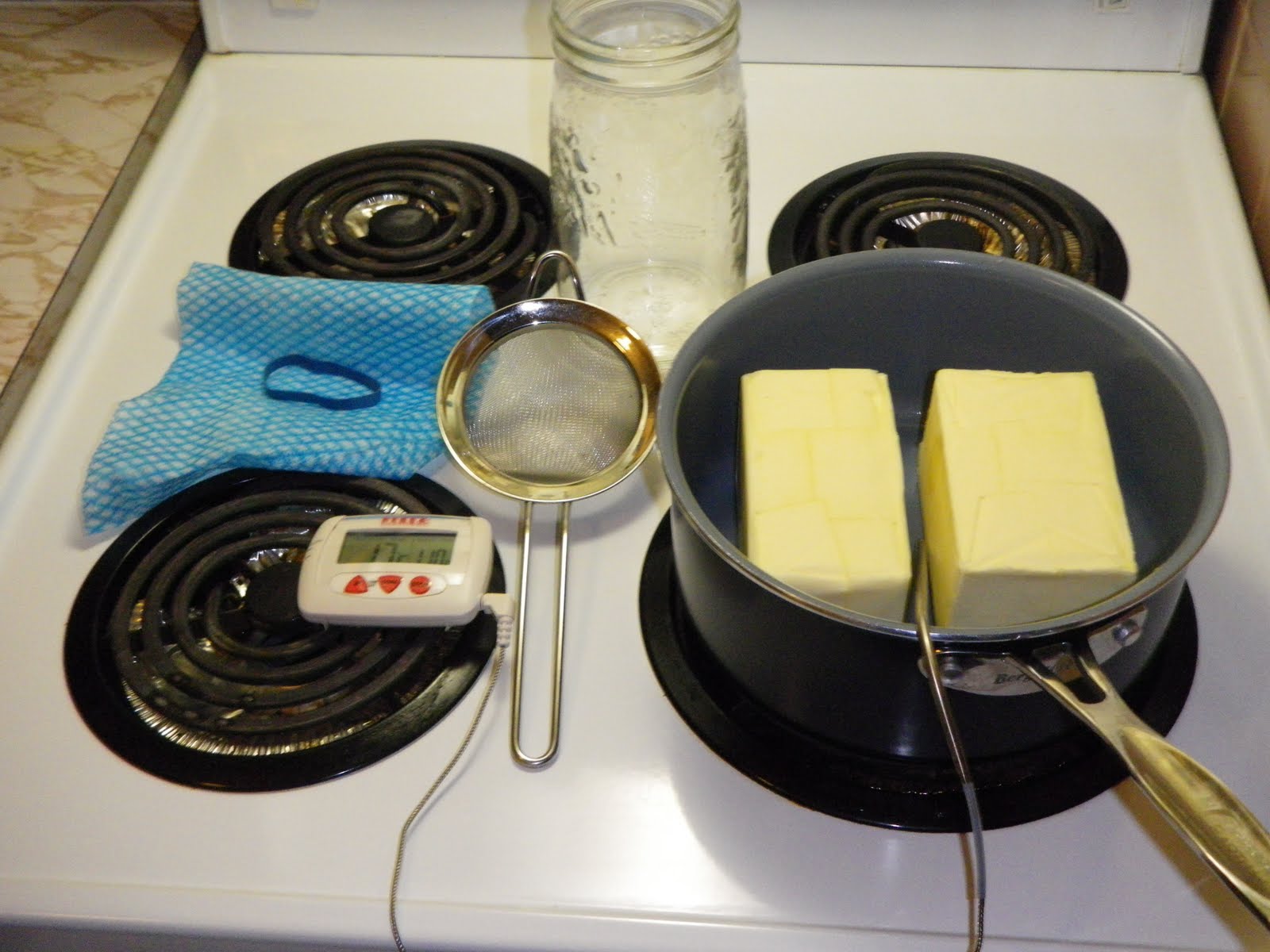
Clarifying Butter (i.e. Ghee) Guide

Mmm... butter, one of the tastiest of all fats. It also happens to be one of the most nutritious forms of dietary fat, containing the fat soluble vitamins A and D in their animal usable forms. It is also a good source of vitamin K2, which regulates calcium metabolism; K2 has become quite rare in our modern diet with its lack of fermented foods. Unfortunately, butter does contain some milk solids, so if you are gluten intolerant you may also be intolerant of the α-casein that makes up some 80 % of cow milk proteins. It also contains a little bit of lactose, which might make someone with lactose intolerance hurl. What to do? Why remove the milk solids of course. This process is called clarification and can easily be done on the stove top. The finished produce is often called Ghee, as it was once a staple of Indian cooking.

An additional advantage to clarifying butter is that it does not brown or burn nearly as easily so cooking with it at high temperatures is safer. Traditionally ghee is often flavoured with cinnamon or cloves. Incidentally cinnamon is a folk-method for treating diabetes; it has an insulin-like effect in addition to being high in chromium.

I typically clarify two pounds of butter at a time. Since the volume of the butter will be reduced by about 1/4 (primarily water and the filtered milk solids) this yields about 750 mL of high quality cooking fat. You'll want the following ingredients and apparatus:
  • 2 lbs. butter (cultured butter will taste better)
  • optional: wholes cloves and cinnamon stick
  • sauce pan
  • ladle
  • thermometer, digital w/ alarm
  • strainer
  • elastic band (like the type broccoli stalks come with)
  • terrycloth or cheesecloth
First start by melting the butter in the pan on low. As it melts to cover the bottom of the pan you can turn it up to medium and stick your thermometer into the oil. Set the alarm to 110 °C (230 °F). You don't want to use high heat here, as there's only a limited amount of water in the butter so it's mostly just a matter of time for the oil to heat up.

When water evaporates it takes away an enormous amount of heat, so the temperature of the ghee will stall a bit at or just above 100 °C (212 °F). At this point, the butter will separate into its three constituents: the milk solids, which will settle on the bottom, the golden-coloured oil itself, and a layer of foam on the top.

The foam does not contain casein, but it is unsightly and we want to get rid of it with our strainer. Just skim around the top, and then wash the strainer off with hot water. After 2-3 skims, you should have a cleaner looking product.

After cleaning off the foam you are essentially just boiling away the water content of the butter. Honestly if you know what you're doing and watch the butter carefully you don't need the thermometer. As the oil heats up, the bubbles will get smaller and smaller. When the oil stops bubbling, that means all the water has evaporated and the temperature of the oil will start to rise very quickly. When or if the milk solids at the bottom of the pan start to turn brown, remove the pan from the heat immediately. I generally wait until 125 °C (257 °F) to finish heating.

At this point it's time to transfer the clarified butter into your jar. I use terrycloth instead of cheese cloth for a few reasons. One, it is far cheaper and easier to find. It's even reusable, and it seems to do a better job of filtering the milk solids than cheesecloth. I do wash it beforehand. The elastic is wrapped around the base of the strainer to hold the filter in place.

That's it! Now just cap your jar and clean up. The hot ghee will be transparent and look a fair bit like thick urine. If any milk solids did make it through the filter process, they will settle on the bottom. As it cools to room temperature, it will become more solid and turn a pale yellow colour.

Ghee is shelf-stable although I would store it in a cupboard away from light. It can be refrigerated but it becomes very hard at colder temperatures and impossible to get out of the jar with a spoon.

If you can't afford high-quality grass-fed organic butter (I certainly can't), you may want to consider adding vitamins D3 and/or K2 if you can buy them in drop form. Add them to the finished ghee in the jar and stir.